
See how simple procurement can be

RFx Software: Types, Process & How to Choose Tools in 2026
What RFx means, how RFI, RFP and RFQ differ, how the RFx process works and what separates useful RFx software from digitized paperwork.
Sourcing used to be a linear task: write a spec, invite bids, pick a winner. It rarely works that way now. A single software purchase can pull in security, legal, IT, finance and the budget holder before anyone so much as speaks to a supplier .
RFx software exists to hold the process together. It replaces the historic RFx nightmare of drowning in spreadsheets and email threads, and instead allows teams to run Requests for Information (RFI), Proposals (RFP) and Quotations (RFQ) in a structured, auditable and comparable process – one where every supplier answers the same questions, every response is scored against the same criteria and the reasoning behind the award decision is fully documented, right down to the person who made it.
Below, we’ve covered what RFx means in procurement, how the different RFx types differ, the different stages of the RFx process and what to look for when evaluating RFx tools. It also covers something that many organizations overlook: when running an RFx is the wrong call.
What is RFx in procurement?
RFx is a catch-all term encompassing the formal requests procurement teams issue to suppliers during sourcing – Requests for Information, Proposals, Quotations, Tenders and Bids. The x is simply a placeholder standing in for whichever of those you happen to be running.
Each RFx type is a structured request sent to a defined group of suppliers or vendors, asking them to respond to the same questions in the same format so that answers can be compared side-by-side. That comparability is the entire point: an unstructured supplier conversation produces anecdotes, an RFx produces evidence.
Procurement RFx activity typically sits within the sourcing stage of the wider procurement cycle – after a need has been identified and a budget confirmed, and before contract negotiation and award. In the context of intake-to-procure, it’s the bridge between a validated request and a signed agreement.
RFI vs RFP vs RFQ and beyond: What each RFx type stands for
The important thing to be aware of is that there is no fixed sequence. You do not need to run an RFI, RFP and RFQ for every purchase. The right option – or combination of options – depends entirely on your specification maturity, market complexity and the spend or risk involved.
RFI vs RFP vs RFQ: What’s the difference?
The differences between RFI, RFP and RFQ in procurement often come down to three variables: how much you already know about the supplier, what you’re asking of them and what you’ll decide on.
RFI vs RFP
An RFI is exploratory. You’re mapping the market: who’s out there, what they broadly do, whether they serve companies like yours and whether they can meet baseline compliance requirements. Responses are short, structured and largely factual. You’re not choosing a supplier at this stage, you’re deciding who is worth asking the harder questions.
An RFP is evaluative. You’ve defined the problem and you’re asking suppliers to propose how they’d solve it. Because approach genuinely varies between suppliers, responses are longer and less directly comparable, which is why weighted scoring matters. An RFP therefore produces a decision.
RFP vs RFQ
While an RFP asks how, an RFQ asks how much. The dividing line is specification maturity. If you can precisely define what you need – quantity, technical specification and delivery terms for direct procurement purchases, or license count, service level and contract terms for indirect spend such as software – and the only meaningful variables are price and commercial terms, run an RFQ. If suppliers would each solve the problem differently, run an RFP.
What is RFx software?
RFx software is the tooling layer that runs sourcing events end to end: building the request, generating the questionnaire, inviting and managing suppliers, collecting responses in a structured format, scoring them against defined criteria and producing an auditable record of the decision.
The alternative – which remains the default in many organizations – is a document template, a distribution list and a folder of returned attachments. This works until it doesn’t. It fails on version control, on comparability when suppliers answer in their own format, on chasing non-responders, on collecting internal stakeholder input and on evidencing why a particular provider won.
RFx software addresses each of these and in doing so changes what procurement can realistically take on.
Teams that run sourcing manually tend to ration it – competitive processes get reserved for the largest purchases while everything else, including tail spend, goes to the requester’s preferred vendor, often accepted at list price because nobody had the time to compare alternatives or negotiate the contract.
In an average tech stack of 144 applications, dozens of tools will have slipped through without competitive terms or pricing – a missed savings opportunity that only compounds with every auto-renewal.
What is RFx management?
Where RFx software is the tooling, RFx management is the discipline, covering how sourcing processes are governed across an organization. This includes defining which thresholds trigger a competitive process, who owns which stage, which templates and questions are approved for use, how scoring criteria are set, how supplier data is maintained between events and how outcomes feed back into future sourcing.
Mature RFx management is what separates teams that run good individual RFx from ones that run sourcing as a repeatable capability. The true test is whether your third RFx in a category is faster than your first.

Where RFx sits in the procurement stack
- Standalone RFx / e-sourcing software: Runs the solicitation event itself. Narrowest scope.
- Procurement orchestration: Coordinates the entire intake-to-procure process across stakeholders and systems, with RFx being one step inside it.
- Procure-to-Pay (P2P): Requisition through to payment. Downstream of the RFx.
- RFP response software: This is sell-side software built for vendors answering requests, not a buy-side procurement tool.
A standalone RFx tool solves the solicitation, but leaves the surrounding workflow untouched. This creates four main operational consequences:
- Siloed approvals: Legal, security, finance and executive sign-offs remain trapped in email threads and ticketing systems – running sequentially rather than in parallel with sourcing.
- Late-stage risk: Vendors clear commercial scoring only to fail a security review, DPA negotiation or data residency check right before signing, forcing an expensive restart.
- Redundant data collection: Supplier data vanishes post-event. Onboarding resets from scratch, forcing teams to re-collect compliance, insurance and certifications already submitted during the RFx.
- Incomplete cycle visibility: Reporting tracks vendor response windows but fails to measure the true end-to-end lead time, keeping your biggest operational bottlenecks invisible.
The RFx process, step by step
While execution varies by category and organization, effective sourcing follows a consistent eight-step sequence:
- Define requirements: Capture functional, technical, security and budget needs through a structured intake management process. Avoid vague specs (which yield incomparable bids) or over-padded wish lists (which scare off good vendors).
- Select the RFx instrument: Match the request type (RFI, RFP or RFQ) to your level of specification maturity.
- Build the solicitation: Use pre-approved question libraries. State your submission deadlines, Q&A windows and crucially weighted scoring criteria upfront so vendors write tailored, high-quality responses.
- Invite suppliers: Curate a targeted list using market research and benchmark data. Avoid over-inviting; too many bidders dilutes effort from top suppliers and inflates your evaluation workload.
- Manage the response window: Field vendor questions and share all clarifications with all participants to ensure fairness. Proactively track progress and chase non-responders before the deadline.
- Evaluate and score: Collect scores from evaluators independently before group discussions to avoid anchoring bias. Normalize (level) pricing models to ensure a genuine comparison.
- Shortlist and negotiate: Run demos, check vendor references and move into commercial negotiations – leveraging pricing benchmarks to secure optimal terms.
- Award, contract and archive: Notify all participants (including losing bidders to maintain vendor goodwill). Finalize the contract, log the scoring record for compliance and feed the results back into your benchmark database for future events.
Which RFx should you run?
Start with what you already know:
- You have no clear view of the supplier landscape > RFI, then an RFP or RFQ depending on the outcome
- You know the market, and suppliers would each solve the problem differently > RFP
- Vendors and requirements are settled and pricing is the main variable > RFQ
- The outcome is clear but no established solution exists > RFS
- You’re in the public sector or running a regulated procurement above threshold > RFT / RFB, under the applicable rules
Direct vs indirect purchases
The way you run an RFx process depends heavily on what you are buying:
- Direct procurement (goods and materials for products you sell):
- Leans on RFQs: Specifications are fixed and engineering-led. Negotiations center strictly on unit price, volume tiers, lead times and delivery terms.
- RFIs and RFPs are rare: RFIs qualify vendor capacity; RFPs are reserved for complex services like logistics. High switching costs mean direct RFx events are often used to test market pricing rather than switch suppliers.
- Indirect procurement (software, services and business operations):
- Leans on RFPs: Requirements are stakeholder-led and often imprecise. Because supplier approaches vary widely, award decisions rely on multi-criteria scoring rather than price alone.
- Unique hurdles: Security, data residency and technical integration act as strict gating criteria. Weighted scoring frameworks are essential to neutralize internal bias toward preferred vendors.
- The software exception:
- RFQs come late: Once you shortlist vendors and fix the tier, seat count and term length, an RFQ turns an apples-to-oranges comparison into a straight price negotiation.
- RFIs stay relevant: Fast-moving tech landscapes mean the market changes significantly between 1 to 3 year renewal cycles.
- Calibrating by spend and risk:
- Low spend, low risk: Skip the formal RFP. The administrative cost usually exceeds any potential savings.
- High spend, high risk: Always run a formal competitive process, even if stakeholders insist they already know which vendor they want.
When not to run an RFx
An RFx isn’t mandatory. In fact, running a full competitive process is the wrong decision in four key scenarios:
- Satisfactory renewals: Benchmark-led renegotiations deliver far more value with significantly less effort. Vertice data reveals software renewals already take 87 days on average compared to 36 days for new purchases. Adding an RFx to the slowest part of your pipeline is rarely justified – unless the incumbent is underperforming, the market has shifted dramatically or the contract value is large enough to create real competitive leverage.
- Sole-source constraints: When only one supplier is viable due to platform dependencies, regulatory mandates or proprietary integrations, running an RFx is performative theatre that wastes supplier time. Document the business justification and skip the solicitation.
- Low-value spend: Set a clear financial threshold for competitive events and hold to it. Tail spend requires volume aggregation and spend controls, not individual multi-week RFx events where process costs exceed potential savings.
- Inability to act on the outcome: If a contract has 18 months remaining with no exit clause, or if internal leadership has already finalized their choice, an RFx generates useless work. Wait until you have a live, actionable decision to make.
Core capabilities of leading RFx software
When evaluating RFx software, nine key capabilities separate genuinely useful platforms from digitized paperwork:
- Templates and question libraries: Approved, versioned question sets by category, ensuring each new sourcing event is faster than the last.
- Structured response capture: Standardized answer formats that make vendor responses instantly comparable without manual reformatting.
- Configurable weighted scoring: Multi-evaluator scoring, customizable criteria weightings and independent evaluation before consensus meetings.
- Supplier portals: A centralized workspace for submissions, document uploads and status tracking that eliminates email chasing and maintains clean vendor data.
- Native risk and compliance checks: Integrated security questionnaires, certification tracking and third-party risk assessments completed during evaluation rather than after award.
- Pricing benchmarks: Real-world visibility into what peers actually pay. Vertice benchmarks pricing across 32,000+ vendors using over 2 million pricing points, revealing whether a quote is genuinely fair rather than merely competitive-looking.
- Stack integration: Direct connections to ERP, P2P, ITSM and communication tools to eliminate manual data handoffs.
- Reporting and audit trails: Automated tracking of cycle times, cost savings, supplier participation and defensible decision logs mapped to your procurement KPIs.
- Cross-stakeholder orchestration: The capability most point solutions lack – and the one with the largest impact on deal velocity.
How Vertice handles RFx
Vertice approaches RFx as one stage of an orchestrated intake-to-procure journey rather than a standalone event, combining platform automation with hands-on procurement expertise.
AI and automation’s role in RFx management
The automation is concentrated at the points where an RFx typically stalls: getting a usable brief out of a vague request, chasing vendors and suppliers, and making non-comparable responses comparable.
Requirements are detected automatically at intake and turned into a structured sourcing brief, with vendor recommendations shortlisted based on your criteria.RFI, RFP and RFQ documents are generated from those requirements and suppliers are managed through a centralized portal where they submit documents and track response status. Responses are then collected and summarized, with key differentiators, risks and gaps identified. Evaluation uses configurable weighted scoring with side-by-side comparisons. Third-party risk management runs natively alongside, with continuous monitoring rather than point-in-time checks.
Beneath all this sits the part that’s harder to replicate: pricing benchmarks across 32,000+ vendors, meaning evaluation reflects what comparable organizations are actually paying – not just what potential suppliers are quoting.
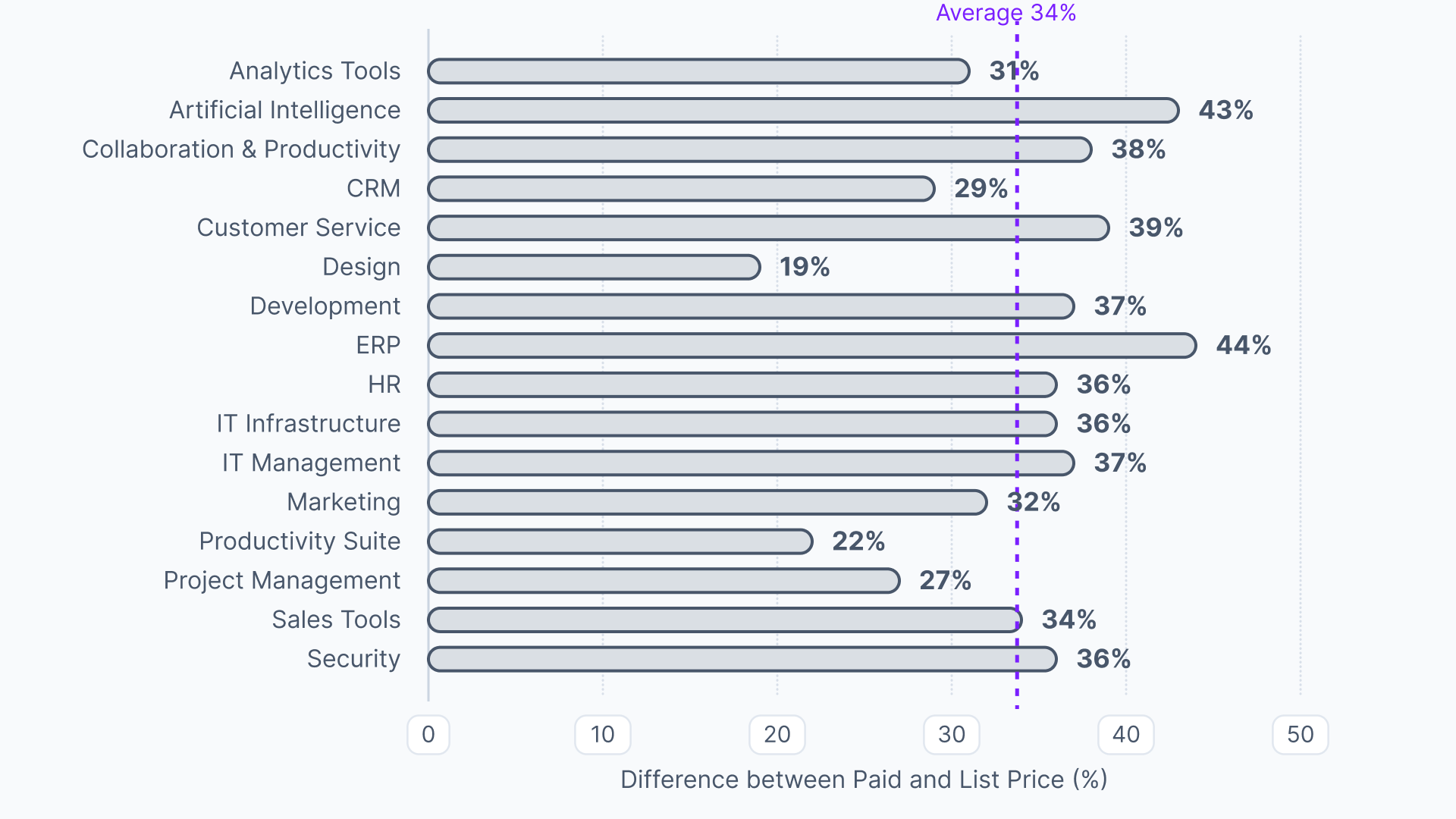
Vertice’s 2026 data shows that with the right benchmarks and negotiation strategy, organizations can secure average discounts of 34% from list price – often far higher in categories such as AI (43%) and ERP (44%).
Where the experts come in
Vertice’s sourcing and negotiation experts can run any RFx type on your behalf, but with the decision ultimately sitting with you:
Request for Information (RFI) – Vertice creates and sends the RFI, manages vendor outreach, collects responses and delivers a consolidated summary, so you can assess the market before committing to a full sourcing process. This outsourced procurement support is beneficial when you’re exploring a new software category, need market intelligence before committing or want to filter options before running an RFP or RFQ.
Request for Proposal (RFP) – Vertice can design and run the full process: requirements alignment, vendor coordination and response management, a scoring and comparison framework and an evaluation summary with a shortlist and recommendations. This is beneficial when you’re selecting between multiple vendors, requirements are clearly defined and stakeholders need a structured objective evaluation they can all stand behind.
Request for Quotation (RFQ) – Vertice can manage setup and vendor coordination, compare quotes side by side and assess commercial terms – surfacing the pricing differences that affect total spend and giving you competitive quotes as negotiation leverage. This is useful when vendors and requirements are finalized, pricing is the primary decision factor and you’re preparing to negotiate.
Frictionless handoffs, maximum sourcing coverage
Because Expert Engage is embedded directly inside the Vertice platform, there are no clunky handoffs or context switches. You submit the request, our specialists handle the execution, and you track real-time progress right alongside your existing workflows.
The Vertice platform will already have a deep understanding of your stack - where your live procurement data lives, what your current business needs are and where your strategic priorities lay. To bring in and educate an equivalent external consultant would require weeks of onboarding, reducing the time you are reaping the benefits.
Running a competitive RFx isn't difficult – it's time-consuming. That is why lean teams often ration their effort, running competitive events for flagship purchases while letting the next twenty tools roll over at list price.
By removing the manual effort constraint, Vertice enables you to optimize a far greater portion of your spend. See for yourself how Vertice streamlines procurement, achieves savings of at least 20% and halves procurement cycle times by taking a self-guided tour of the platform.
RfX Software
FAQs
RFx is a catch-all term encompassing the various formal requests issued to suppliers, where the x is a placeholder for the specific type, Request for Information (RFI), Proposal (RFP), Quotation (RFQ), Tender (RFT) or Bid (RFB). It's used when referring to supplier solicitations generally rather than to one type.
In procurement, RFx refers to the family of structured requests sent to suppliers during sourcing. Each asks a defined group of suppliers to respond to the same questions in the same format, so responses can be compared objectively. RFx activity sits in the sourcing stage of the procurement cycle, between requirement definition and contract award.
An RFI gathers information to understand a market and shortlist suppliers. An RFP asks shortlisted suppliers how they would solve a defined problem and at what cost, and is scored against weighted criteria. An RFQ asks for pricing against a fixed specification, where price and commercial terms are the main variables. In short: RFI explores, RFP evaluates, RFQ prices.
.webp)