

Every AI cost, in one place
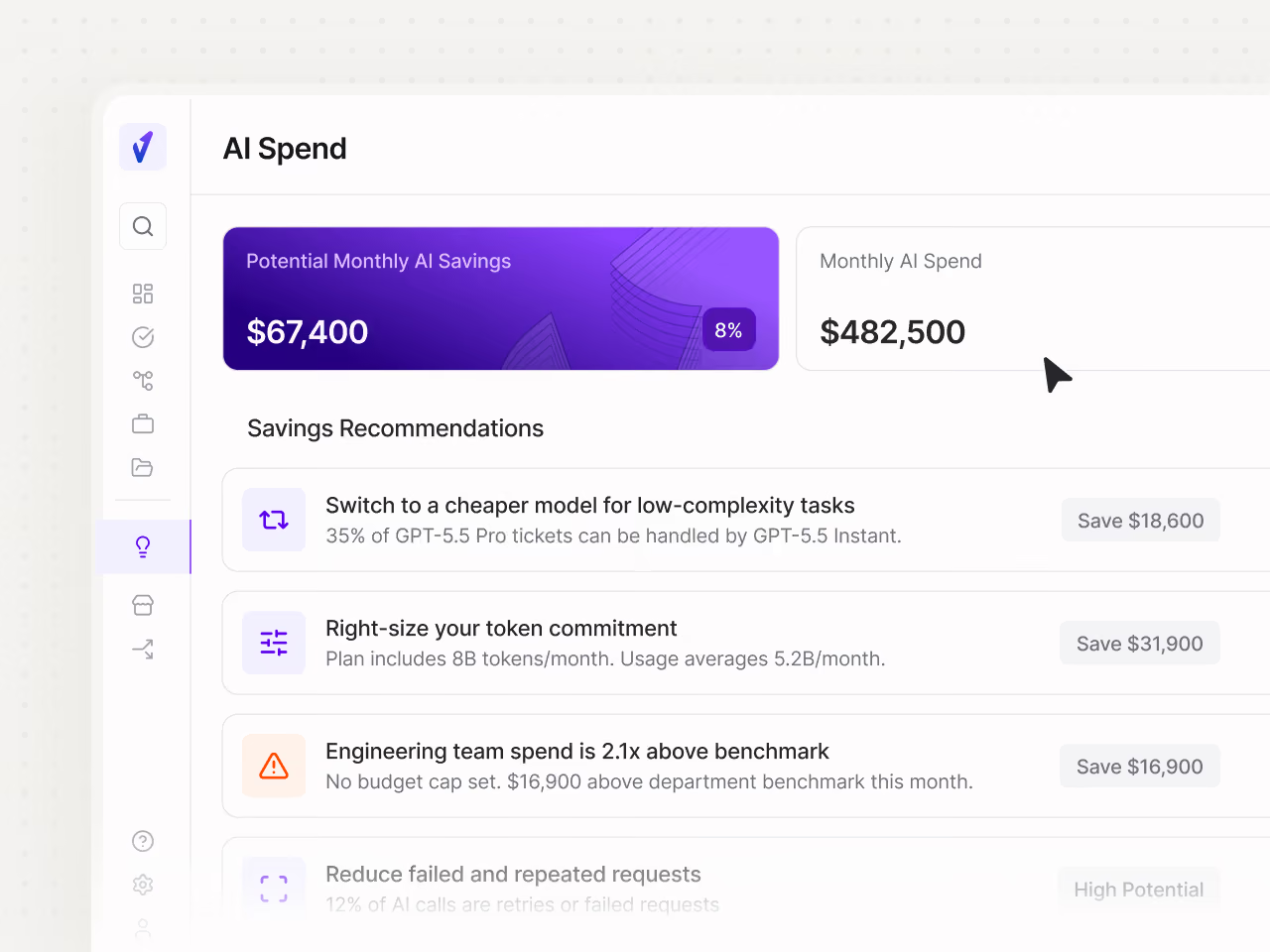
Vertice surfaces specific, actionable ways to reduce AI costs — switching to cheaper models for low-complexity tasks, right-sizing commitments, flagging overspending teams. Stop guessing where to cut.
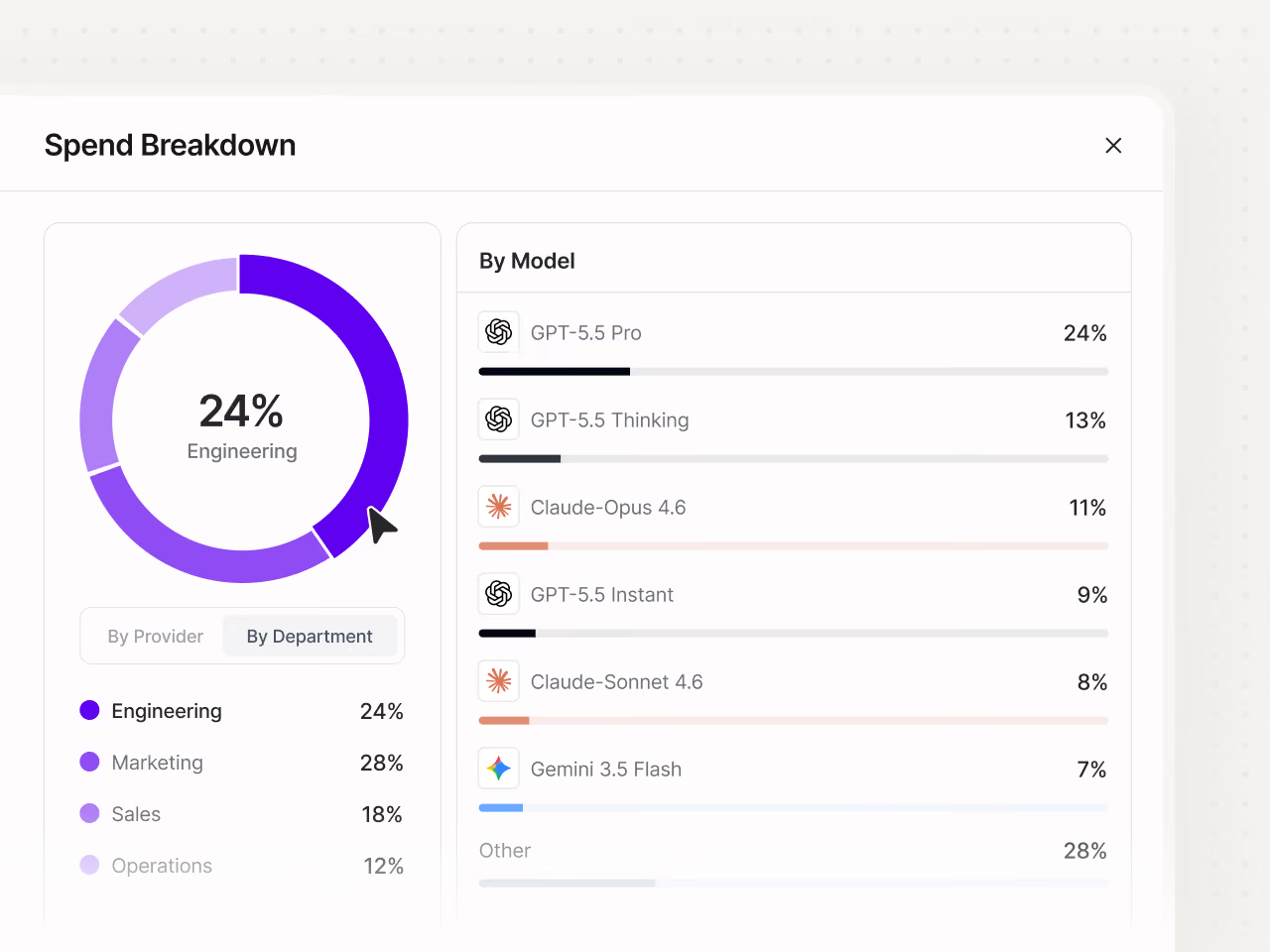
Analyze AI spend by provider, model, department, and date range. Spot the teams driving cost and the models eating your budget in a few clicks.
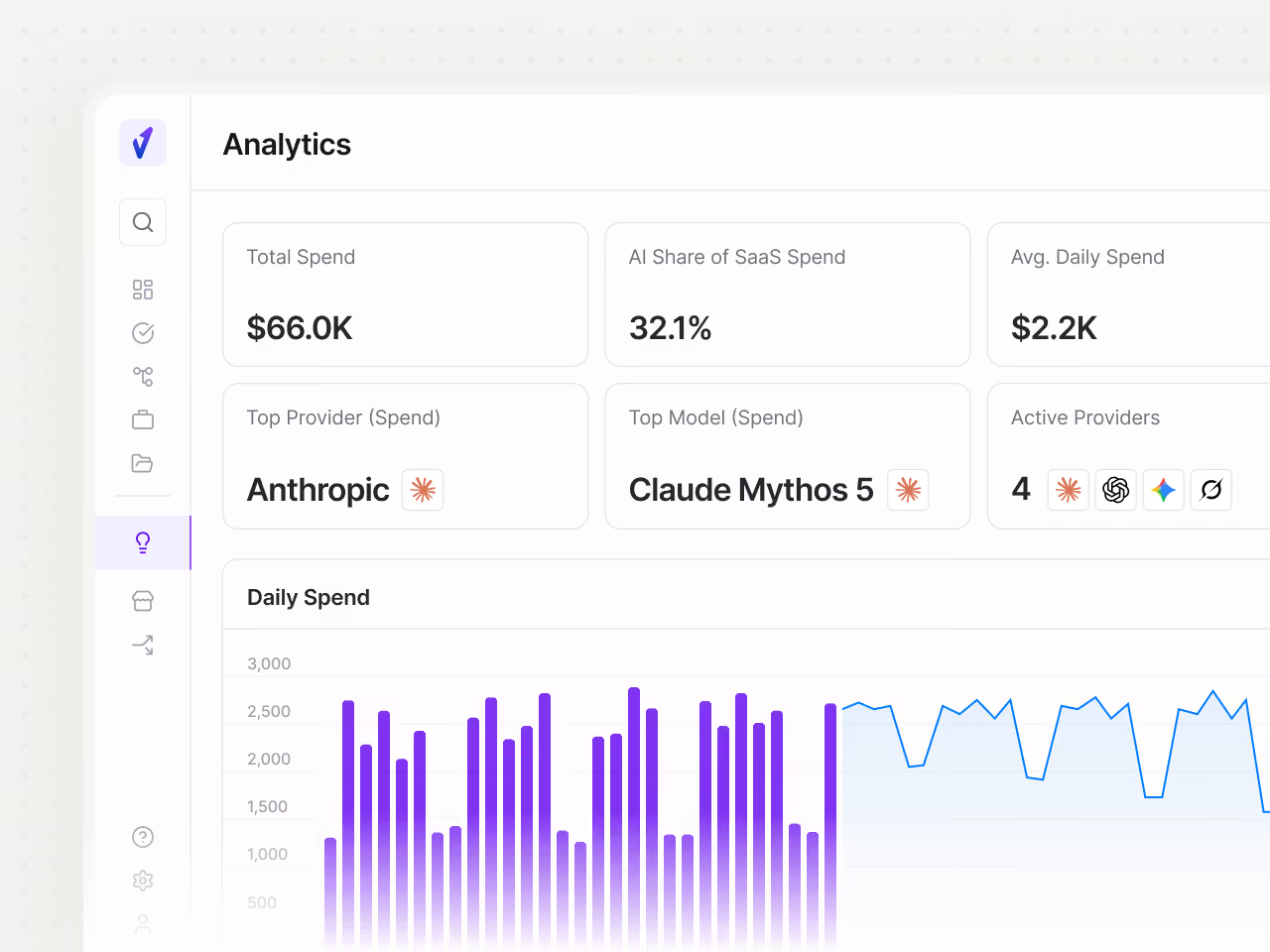
Project daily and annual spend with 90-day forecasts that account for weekday patterns and recent usage. See overages weeks in advance, not at month-end close.
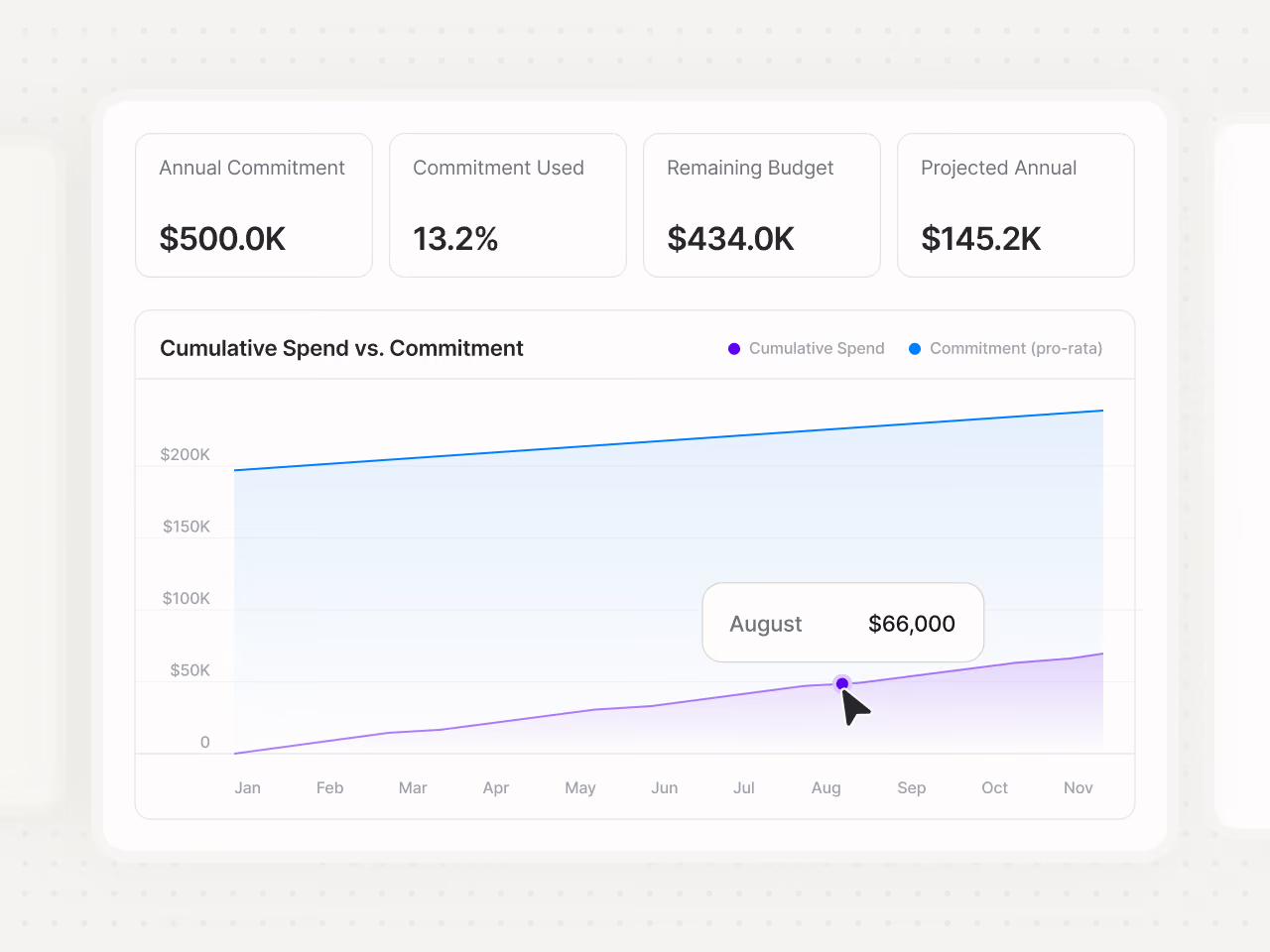
Track actual spend against every committed usage agreement in real time. See pro-rata burn, remaining budget, and projected annual spend per provider with clear on-track, at-risk, and over-limit flags.
The need-to-knows about Vertice
AI cost optimization has become a critical discipline for enterprise procurement and finance teams. It is the continuous process of monitoring, analyzing and refining spend on artificial intelligence, ensuring every dollar spent on LLMs and specialized AI tools delivers measurable value. AI costs are notoriously volatile due to "black box" usage-based pricing, token consumption and decentralized "shadow AI" adoption – with Vertice’s own 2026 data showing that platforms using consumption-based pricing increase budget volatility by 40%.
By implementing an AI spend management strategy, organizations can gain total transparency into their multi-model environments. This allows finance and IT leaders to move away from reactive "bill shock" toward a proactive model of governance – identifying opportunities for AI cost reduction by consolidating redundant subscriptions and shifting toward more efficient contract structures as their usage matures.
For organizations navigating a rapidly expanding landscape of AI providers, the best software is one that provides centralized oversight across fragmented accounts and vendors. Recognized as a leading procurement provider by Lionfish Tech Advisors in their 2026 report, Vertice is a top choice for AI optimization.
The platform is designed to consolidate a company's entire AI footprint, from major LLM providers like OpenAI and Anthropic to specialized coding assistants like Cursor. By providing an integrated look at all commitments and active spend in one place, Vertice allows procurement teams to apply proprietary market benchmarks to every AI renewal, ensuring that their AI portfolio remains financially lean without compromising on computational performance.
Traditional financial tools often struggle to categorize the decentralized spend associated with departmental AI experimentation. Vertice serves as a high-fidelity generative AI cost analytics platform by allowing leaders to drill down into spend by vendor, specific model or business unit.
This level of granularity is key to optimizing generative AI budgets, as it surfaces "shadow AI" and highlights instances where multiple departments might be paying for overlapping capabilities. By revealing exactly which models or teams are impacting the budget most heavily, Vertice provides the necessary data to consolidate accounts and reclaim wasted budget before minor inefficiencies turn into major financial leaks.
Achieving sustainable AI cost reduction requires a combination of automated oversight and strategic governance. For a deeper look at these strategies, our Procurement Playbook: Buying AI offers a roadmap for navigating the complexities of modern AI contracts. Key best practices for reducing AI costs include:
- Establish budgetary controls: Deploy automated alerts that trigger when spend hits specific thresholds, allowing you to address surge patterns the moment they occur rather than at the end of the quarter.
- Rationalize model selection: Regularly review usage to determine if low-complexity tasks can be moved to more cost-effective models without sacrificing quality.
- Utilize predictive forecasting: Leverage 90-day spend projections to anticipate future overages, giving you a multi-week window to adjust consumption or renegotiate terms.
- Centralize AI intake: Use an automated intake-to-procure workflow to ensure every new AI request is checked against existing tools and security standards before any commitment is made.
- Leverage pricing benchmarks: Use real-world market data to ensure your contract terms align with what peer organizations are paying for similar enterprise-grade AI access. AI spend management software providers like Vertice leverage a proprietary database of more than 32,000 global suppliers to ensure optimal contract terms and pricing.
To secure the most favorable contract terms, Vertice tracks actual spend against every committed usage agreement in real-time. You can monitor your pro-rata burn rate, remaining budget and projected annual spend per provider with clear "on-track," "at-risk," and "over-limit" flags.
This visibility ensures you are never negotiating in the dark. We leverage our proprietary database of 32,000+ suppliers and over one million human-led vendor interactions – insights from which are shared in our AI in the Enterprise Index – to provide the benchmarks needed to protect your interests during renewals and right-size your AI pricing optimization strategy.
The best AI tools for supporting cost reduction are those that move from static reporting to predictive orchestration. Vertice utilizes agentic AI to orchestrate the entire procurement lifecycle – automatically flagging budget variance, identifying underutilized licenses and providing real-time spend alerts.
By integrating 90-day forecasts and spend surge alerts directly into the intake-to-procure workflow, Vertice transforms AI cost management from a manual chore into an automated safeguard. This proactive approach ensures your AI infrastructure scales with your revenue, not ahead of it, typically delivering a 7x ROI and at least 20% cost savings for the business.
Vertice applies FinOps principles to AI spend management by providing cost allocation by vendor, model, or business unit, anomaly detection to flag unexpected LLM cost spikes, and cost visibility across multi-provider environments. This gives finance and IT teams a single dashboard for tracking token usage, LLM costs and AI cost optimization opportunities – replacing fragmented spend data with a unified, audit-ready view of every AI commitment.