
See how simple procurement can be

AI Contract Negotiation
How AI negotiates contracts and why tail spend is where it pays off
Key Takeaways
- AI contract negotiation covers two distinct capabilities: assisted review (copilot) and autonomous negotiation.
- Tail spend is where autonomous negotiation earns its keep – Vertice’s data shows that 72% of tail spend contracts renew without any review, compared to 14% of strategic contracts.
- The average software buyer can secure significant savings off list price by utilizing Vertice’s benchmarking data.
- Guardrails determine whether automated negotiation is safe to deploy.
- Human negotiators stay on the deals where relationship and complexity matters.
What is AI contract negotiation?
AI contract negotiation in procurement is the use of artificial intelligence to review, redline and settle contract terms – either by acting as a negotiation co-pilot and assisting a human negotiator with analysis and suggested wording, or by running the negotiation autonomously within predefined commercial guardrails.
What’s the difference between AI-assisted review and autonomous negotiation?
The core difference between the two is that an assisted review makes a negotiator faster, whereas autonomous negotiation makes negotiations happen that otherwise wouldn’t happen at all.
How does AI contract negotiation work?
Autonomous negotiation runs through five stages. AI-assisted review covers the first two and hands the rest over to a person.
- Contract ingestion and extraction – The agent pulls terms, renewal dates, auto-renewal notice period, pricing structure, uplift caps and other relevant terms out of the existing agreement.
- Benchmarking – The current or quoted price is compared against comparable transactions for the same product, adjusted for region, contract length, deal size and whether pricing is per seat or per usage. This sets a defensible target.
- Guardrail configuration – Price floors, acceptable contract lengths, approval thresholds and escalation triggers. This is where the organization decides what the agent may agree to without asking.
- Negotiation execution – The agent engages the vendor directly, makes and responds to offers, and holds its position within the guardrails it was given. Tools like Vertice’s Autonomous Negotiation Agent (Ana) will still allow teams to review emails before they are sent.
- Escalation and handoff – Anything outside of those guardrails routes to a human, with the full negotiation history attached.
Why is tail spend ideal for autonomous negotiation?
Autonomous negotiation is particularly well suited for tail spend, simply because this is where negotiation often stops happening altogether. Vertice’s data shows that 72% of tail spend contracts renew without review, compared to 14.1% of strategic non-tail spend contracts.
.png)
For most organizations, this is a capacity problem rather than a priority one. Tail spend refers to the lower-value, non-strategic end of an organization’s total spend, but the sheer volume of these smaller contracts means they can still add up to a meaningful amount.
With mid-market and enterprise procurement teams increasingly overstretched, their limited capacity has to go to the highest-value or highest-risk agreements, leaving the tail untouched. Not because anyone decided it wasn’t worth negotiating, but because they simply lack the time.
The cost of leaving it alone is measurable. Renewing without review means accepting whatever the vendor proposes, and these vendors often set list prices expecting to be negotiated down. Every tail renewal that passes unexamined forfeits that gap by default, and it does so quietly, one small contract at a time.
Price is also not the only lever a review would identify. Usage data may show tail applications sitting well below the number of seats being billed, meaning the right outcome could be a smaller contract rather than a cheaper one. On average, 51% of all software applications are underutilized and a further 14% entirely unused.
Then there’s the fact that risk isn’t only commercial. An unreviewed renewal is also an unreviewed set of terms. Auto-renewal windows, price uplift caps, data processing terms and security commitments all roll forward unchanged. And it’s an issue that matters more than it did a few years ago, with many vendors having added AI functionality since these contracts were last signed and the terms governing how customer data is used to train or improve those features have often changed alongside it.
A tail contract that carried little risk two years ago may not carry little risk today.
“Tail spend deserves attention as it's where the untracked risk sits, not only the untracked savings. A rogue vendor with your data, a consultancy that has still maintained access to your internal systems; that's the stuff that can really harm your business if not managed properly.” Johan Mills, VP of Product Strategy at Vertice
How much can AI contract negotiation save procurement teams?
The savings don’t necessarily come from the AI itself. They come from negotiating contracts that would otherwise renew untouched.
That said, with the right AI contract negotiation tool, buyers can bring real pricing evidence to every contract – not just the ones large enough to justify a negotiator’s time. An agent working from comparable transaction data knows what similar companies actually paid for the same product, which is the difference between asking a vendor for a discount and telling them what the deal should cost.
Across $75bn of processed spend, buyers negotiating against benchmark data secure an average of 33.8% off list price.
It’s also not just what gets reviewed, but when. Organizations that begin renewal negotiations 120+ days ahead of deadline save an average of 23.3% more than those who wait until the final month.
What are the risks of automating contract negotiation?
Automating SaaS contract negotiation means delegating judgment, and the risks all follow from that. Three risks in particular are worth taking seriously:
- The agent is only as good as the data behind its decisions: An autonomous agent has to decide what a fair price looks like before it can hold a position on it. If that judgement rests on list prices, vendor-supplied figures or a thin sample of comparable deals, the agent will negotiate confidently toward the wrong number. Ask any vendor how their benchmarks are constructed, how many real transactions sit behind it, how recent they are and whether it accounts for region, contract length and pricing model. A single category average is not a benchmark.
- Suppliers notice how they’re being treated: The concern that automated outreach damages supplier relationships is reasonable, though the comparison being made is often the wrong one. For most tail vendors the alternative isn't a human negotiation, it’s silence followed by an auto-renewal. Engaging every supplier consistently, with clear terms and a fast response compares well against that. Where it goes wrong is tone and persistence – an agent that keeps pushing when a human would have stopped can be damaging. A tool that lets you set its tone of voice and edit messages before they send is therefore crucial.
- Most tools don’t know how vendors actually negotiate: Pricing data tells an agent what a fair number looks like. It doesn’t tell how a particular vendor gets there – which concessions they typically offer, where they hold firm, what they might trade a longer term for, how their behavior changes at quarter end. That knowledge normally sits with experienced negotiators who have dealt with the same vendors repeatedly and an agent working from benchmarks alone lacks this insight. When evaluating AI contract negotiation providers, ask whether their tool has been trained on real buyer-vendor negotiations, and how many, rather than on pricing data alone.
Questions to ask before investing in an AI contract negotiation tool
Many tools in this category differ far more than their websites may suggest. These questions separate them:
Is the tool actually autonomous or is it a copilot?
This is the first thing to establish, because the two solve different problems and the marketing rarely distinguishes them. A copilot drafts, suggests and analyzes, then waits for a person to act. That saves a negotiator time on each deal, but the number of deals is still capped by how many a person can work through. An autonomous agent runs the negotiation itself within the guardrails it was given, which is what removes capacity as the constraint.
How deep is the pricing data and where does it come from?
An agent has to know what a fair price looks like before it can hold a position on one. That judgment is only as good as the evidence behind it, so ask how many real transactions sit behind the benchmark, how recent they are and whether the figures come from actual buyer-paid prices or from vendor-reported list data. Also ask whether the pricing benchmarks adjust for region, contract length, deal size and pricing model, because a single category average will not tell you what your specific deal should cost.
Has it learned from real negotiations or only from price benchmarks?
Knowing the target number is not the same as knowing how to reach it. Vendor-specific behavior – which concessions come first, where a supplier holds firm, what they will trade for a longer term – sits with experienced negotiators, not in a pricing table. A tool trained on real buyer-vendor interactions can build a strategy around that. One working from benchmarks alone tends to know the right target and settle for whatever falls near it.
Can you see where every recommendation came from?
General-purpose models produce confident answers with no traceable basis, which is a problem when you are about to act on one commercially. Look for recommendations you can click into and follow back to the source, so a negotiator can check the reasoning rather than take it on trust.
How much control do you keep?
Autonomy should be a setting, not a mode. The right level differs between a $10,000 tail renewal and a strategic agreement, so look for tools that let the agent run unsupervised where that is appropriate and act as a copilot where it isn't – with every message reviewable before it sends, and the tone of voice set by you rather than by the model. Escalation logic matters here too: what falls outside the guardrails, and where does it go.
How Vertice’s autonomous negotiation agent works
Vertice’s AI negotiation agent, Ana, is built to automate software deals using $75B in verified transaction data – not list prices. Ana handles the process end-to-end by benchmarking rates, forecasting outcomes and drafting tone-matched vendor communications. You retain full control: let Ana autonomously close long-tail renewals to eliminate backlogs, or run it as a copilot on high-value contracts where you review every message.
To date, Ana has negotiated over $500M across 4,000+ deals, delivering an 18% average savings and cutting 15 days off renewal timelines.
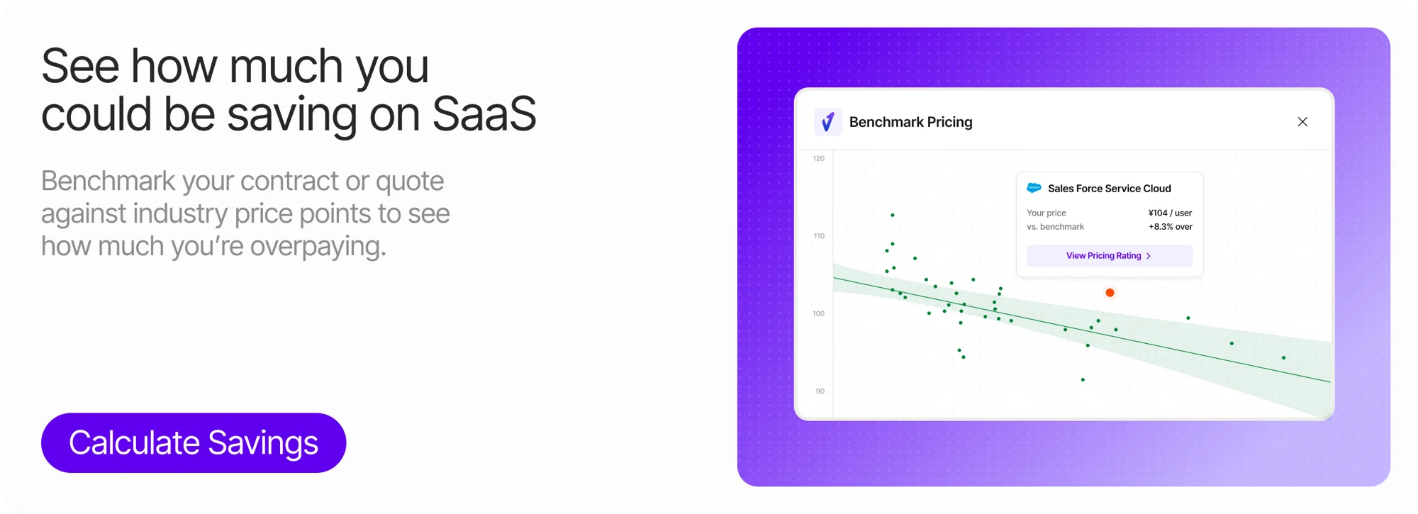
Compare your current quote against 2M+ pricing points today, or see for yourself how Ana could support your software negotiations.
AI Contract Negotiation
FAQs
An autonomous negotiation runs in five stages. The agent extracts the commercial terms from the existing contract – pricing, renewal date, notice period, uplift caps and so on. It benchmarks the current price against comparable transactions, adjusted for region, contract length, deal size and pricing model. The organization sets guardrails: price floors, acceptable terms, approval thresholds. The agent then engages the vendor directly, making and responding to offers within those limits. Anything that falls outside them escalates to a human with the full negotiation history attached.
Companies should use autonomous negotiation where volume is the constraint and human negotiation where complexity is. Tail spend renewals are the clearest case for automation – high volume, lower value and, in most organizations, currently unnegotiated. Vertice’s data shows that 72% of tail spend contracts renew without any review, compared with 14.1% of strategic contracts. Higher value or higher risk strategic agreements, particularly where relationship, multi-year commitments or bespoke terms are involved, should remain with human negotiations, with AI assisting rather than acting on their behalf.
Yes. Vertice’s Ana drafts every message to the vendor as part of the negotiation it is running, written in your organization’s tone of voice rather than a generic template. Messages can be reviewed and edited before they send, or left to go out automatically on lower-value agreements. Each round is tracked, so the full exchange stays visible to the procurement team.
Organizations using Vertice’s Autonomous Negotiation Agent have achieved average software savings of 18% and reduced their procurement cycles by 15 days. The case rests less on negotiating better than a person and more on negotiating at all – across $75bn of processed spend, buyers negotiation against benchmark evidence secure an average of 33.8% off list price, and the majority of tail renewals currently forfeit that gap by default.
Automating quote negotiation requires three things: a benchmark to negotiate against, guardrails that define an acceptable outcome and an agent that can hold a position across multiple rounds. Vertice’s autonomous negotiation agent, Ana, benchmarks the quote against real prices paid for comparable deals, builds a negotiation strategy and responds to vendor counteroffers within the thresholds you set. Where a counteroffer falls out of those thresholds, it routes to a person rather than being accepted or rejected automatically.
Absolutely. See Vertice’s Autonomous Negotiation Agent, Ana, in action by scheduling a demo at a time that suits you.
Yes, though the two are built for different types of spend. Pactum runs autonomous negotiations across direct and indirect categories – including logistics, facilities, packaging, office suppliers – at high supplier volumes. Vertice’s Ana is built specifically for indirect spend such as software, negotiating against real terms and prices paid across $75bn of processed spend and 250,000+ contracts, running autonomously on tail renewals or as a copilot on higher-value agreements.
.webp)