
See how simple procurement can be
Procurement Management & Procurement Management Software
Everything you need to know about developing a procurement management process, evaluating software, and measuring success.
What is procurement management?
By definition, procurement management is the strategic process of sourcing, acquiring and managing goods and services within an organization. It specifically involves steps such as identifying needs, selecting suppliers, negotiating contracts – tasks that many mid-sized companies and enterprises now manage through procurement-as-a-service to achieve expert-level results without increasing internal headcount.
Procurement management does, however, go beyond purchasing, and plays a fundamental role in controlling costs, mitigating risks, fostering strong supplier relationships, and aligning procurement activities with overall business objectives.
In fact, by optimizing each of the different stages within a typical procurement cycle, an effective procurement management strategy can help organizations improve efficiency, reduce spend, drive value and gain a competitive advantage.
What is procurement management software?
Procurement management software is the platform layer that runs the procurement management process – automating intake, approvals, spend tracking and supplier evaluation in one system rather than across spreadsheets and email.
The procurement management process
A procurement management process is the strategic approach that plans, executes and controls all procurement activities within an organization, providing a framework to optimize cost savings, reduce risk, ensure quality, strengthen supplier relationships and maintain regulatory compliance.
See how your own procurement function compares to industry standards.
How to develop an efficient procurement management process in 2026
As enterprise tech stacks expand to include complex SaaS ecosystems, cloud infrastructure and rapidly multiplying generative AI tools, traditional purchasing models are no longer sufficient. Developing an efficient procurement management process requires moving beyond siloed, manual buying toward proactive, automated procurement orchestration.
Whether building a process from scratch or modernizing an existing framework, organizations should take these key steps to build a streamlined, cost-effective and risk-resilient procurement engine:
1. Establish a unified procurement framework
A modern framework must define the exact scope of purchasing oversight across all categories – including standard SaaS licenses, cloud infrastructure (AWS, Azure, GCP) and AI platforms. Set clear spend thresholds, outline preferred vendor lists and establish policy guidelines so stakeholders understand when formal procurement involvement is required.
2. Define cross-functional roles and responsibilities
Procurement is rarely a single team's responsibility. Clearly outline who owns each stage of the buying process across Finance, IT, Legal, InfoSec and Business Units. For software and AI tools, designating explicit approval roles eliminates ambiguity, avoids departmental bottlenecks and ensures consistent governance before agreements are signed.
3. Standardize the intake-to-contract journey
Standardize and document the entire source-to-contract lifecycle. Rather than relying on unstructured emails or ad-hoc messaging requests, implement a centralized intake process that guides employees from initial need identification through vendor evaluation, commercial negotiation, legal review and contract execution – before the process moves downstream into procure-to-pay, where purchase orders, invoices and payments are handled.
4. Implement procurement orchestration and AI automation
Dependence on manual tracking is the primary driver of procurement inefficiency. By deploying dedicated procurement orchestration software, organizations can automate routine tasks, auto-extract contract terms, dynamically route requests and eliminate approval delays. Leveraging autonomous AI agents within the workflow speeds up approval timelines while reducing operational friction for end-users.
Case Study: See how modern enterprises achieve up to 55% faster procurement cycles using automated intake-to-procure workflows.
5. Design dynamic procurement approval workflows
Unsanctioned software purchases, shadow IT and unregulated shadow AI pose significant financial and security risks. Establish conditional approval workflows that automatically adapt based on purchase value, risk level, data sensitivity and category. High-value or high-risk AI tools can automatically trigger additional InfoSec and Legal checks, while low-risk, routine purchases can be fast-tracked.
6. Track, forecast and optimize spend
With annual software price increases continuously compounding – SaaS inflation currently sits at 16.4% – and cloud/AI tools introducing volatile consumption-based pricing (such as token billing), active spend management is critical. Implement continuous spend tracking and predictive forecasting to right-size unused licenses, manage variable AI usage and eliminate budget overruns before renewals occur.
7. Modernize sourcing and vendor evaluation criteria
To ensure vendor reliability and long-term ROI, update evaluation criteria to address modern technology standards. Beyond pricing and basic functionality, evaluate vendors on data privacy policies, AI governance, compliance standards, system uptime, and integration scalability. A structured sourcing and evaluation matrix ensures only secure, high-value vendors enter your ecosystem.
8. Centralize visibility, renewals and benchmarking insights
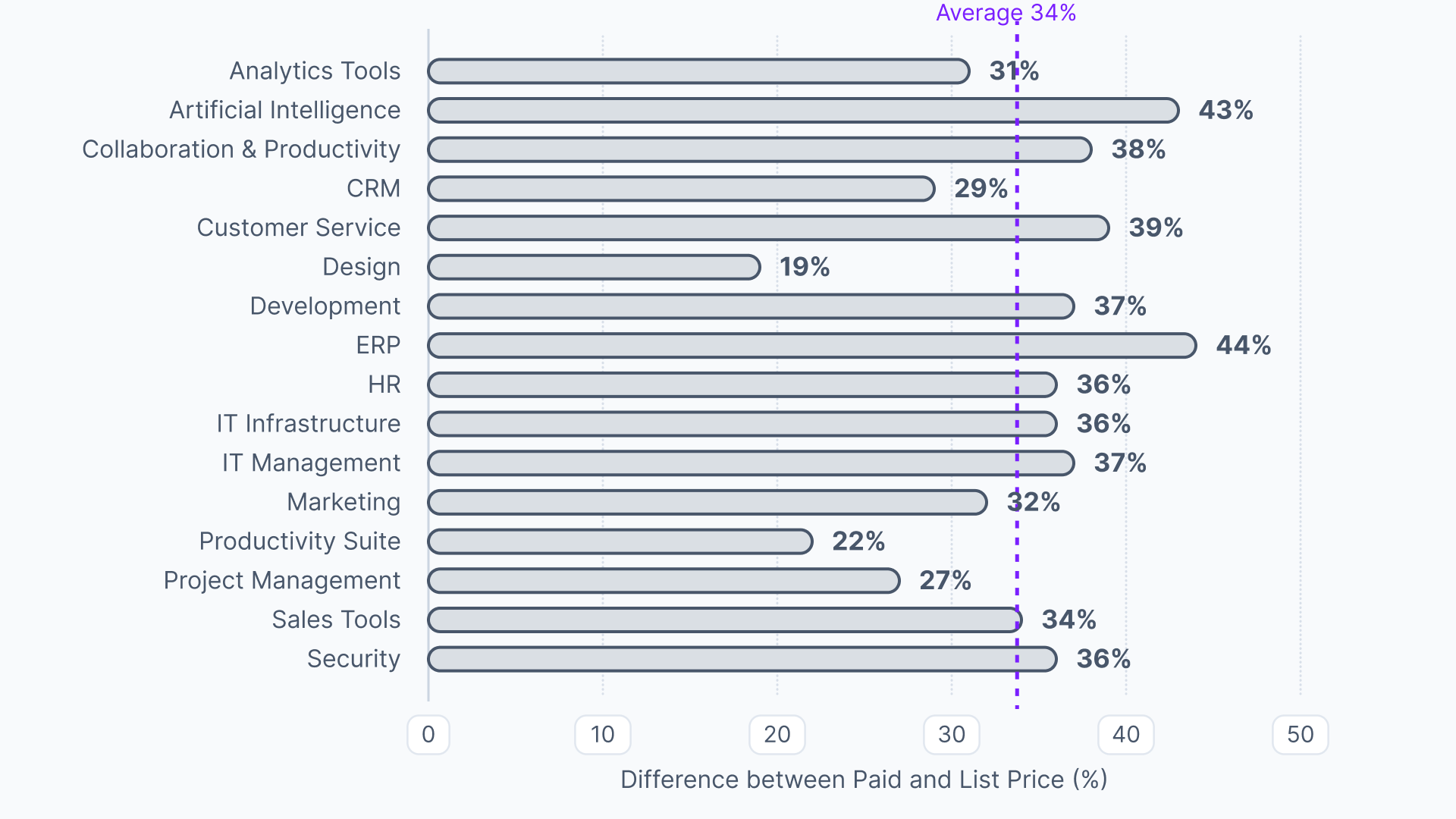
Lack of visibility leads t auto-renewals, redundant applications, and weak negotiating leverage. Implement real-time dashboard reporting that centralizes SaaS utilization, AI consumption and renewal dates into a single source of truth. Pair this internal usage visibility with global pricing benchmark data to negotiate deals based on true market rates rather than vendor list prices. Vertice's data shows that in 2026, companies are paying 34% less for software than the list price.
9. Embed continuous risk management and compliance
Procurement acts as the first line of defense against operational, financial and regulatory threats. Integrate continuous risk management into the procurement workflow by automating vendor security assessments, monitoring third-party risk profiles and ensuring compliance with evolving global data protection standards (such as GDPR, SOC 2, and AI regulations) prior to contract commitment.
Best practices for ensuring effective procurement management
Invest in the right procurement management software
While there are a number of tools on the market, we’d recommend choosing procurement software that offers advanced workflow capabilities, as this will ensure that they are adapted to your specific procurement needs – something that will become all the more important as your business scales. Take a look at the full list of evaluation criteria here.
Get a detailed analysis of the SaaS Procurement and Management Platforms in this Lionfish Tech Advisors Report
Optimize your vendor relationships
Strong vendor relationships are built on trust, transparency and mutual benefit. Giving yourself enough time to handle negotiations helps avoid putting unnecessary strain on the relationship and ensures both parties feel valued.
Working with a procurement partner who can act as an intermediary also helps facilitate clear communication, resolve potential conflicts and ensure that both sides understand each other's needs and expectations. This collaborative approach fosters long-term, productive partnerships that benefit both the organization and its suppliers.
Control and monitor procurement spend
Keeping on top of procurement spend is crucial for preventing wastage – data from Vertice shows that companies with 500 to 1,000 employees waste an average of $1.57M every year on unused and underutilized software, rising to $18.9M for companies with more than 10,000 employees.
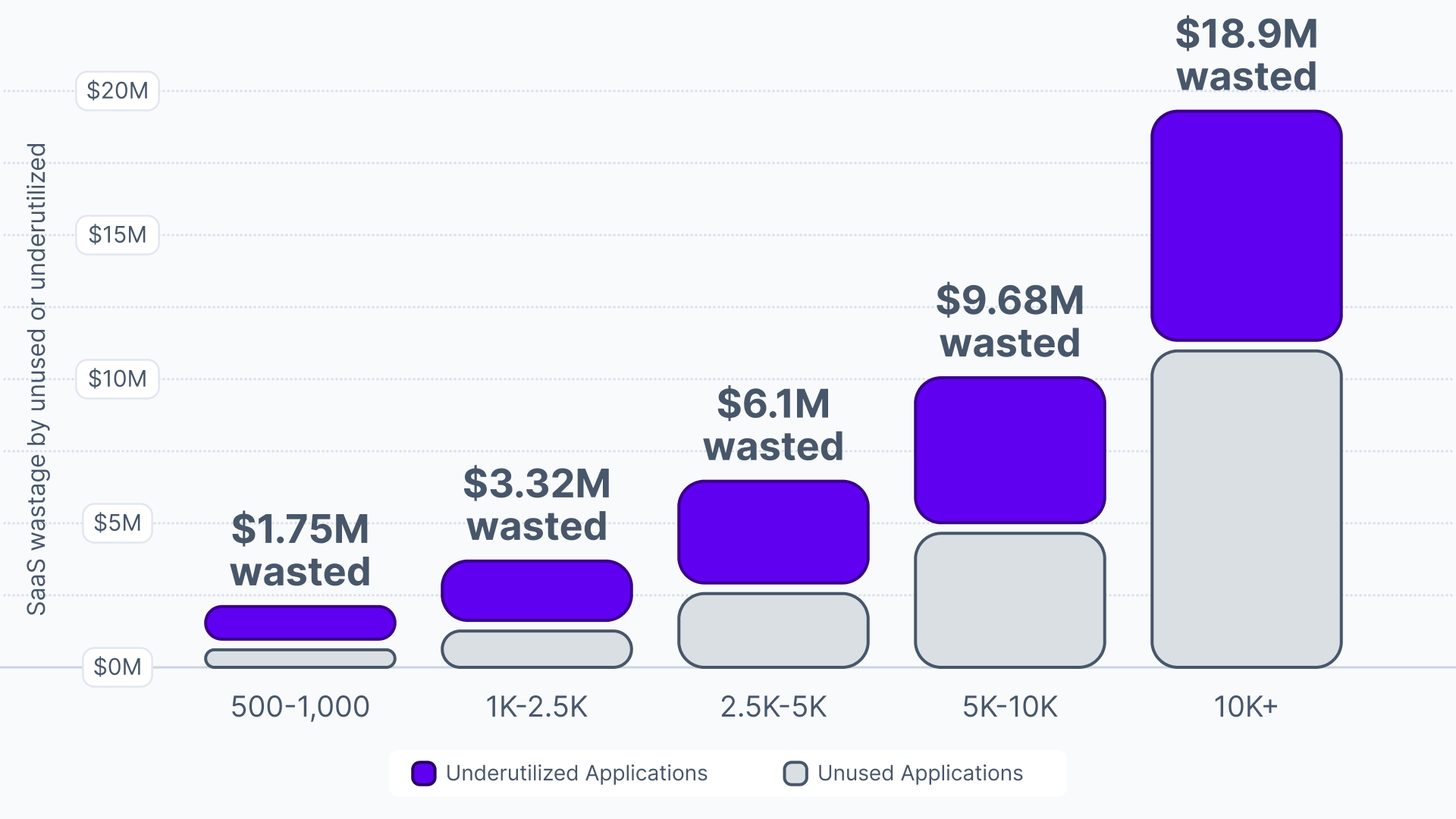
By implementing robust SaaS spend management software, setting clear budgets and regularly reviewing expenditures, you can identify areas of overspending, stay within budget and prioritize cost-saving initiatives. The right platform will support this by flagging issues such as duplicate spending and underutilization, while also ensuring that you’re never paying more than necessary for any tool within your stack.
Measuring success in procurement management
In order to evaluate the effectiveness of procurement management and ensure that all activities are contributing to organizational goals, procurement leaders should be tracking the right metrics.
While the more obvious metrics include the likes of budget vs spend, completed vs inflight spend, and tool usage, there are a number of additional metrics that are being used by the very best procurement teams.
These include:
- Approval times per function – How long each team or stakeholder takes to approve a contract, helping pinpoint who the ‘repeat offenders’ are for delaying purchases.
- Difference between time to complete renewals vs new purchases – The length of time a renewal typically takes to complete, compared to a new purchase request. This may highlight over-simplifications – or under-simplifications – in your procurement management processes.
- Number of suppliers vs proportion of spend – This metric highlights the suppliers that account for the largest portion of your total spend. These suppliers should be prioritized for contract renewals, performance reviews, and benchmarking to ensure you're getting the best value and managing risk effectively
- Average non-compliant spend vs top non-compliant spend departments – Every business will experience maverick spend, however, it is the procurement team’s responsibility to reduce the amount being spent outside of formal procurement workflows.
You can learn more about each of these metrics – along with guidance on what to do with the information – and access an additional seven more in our recent Procurement Metrics that Matter report. Alternatively, take a look at our insights hub.
Things to consider when evaluating procurement management software in 2026
Evaluating procurement management software requires assessing how well a platform handles the complexities of modern enterprise spendf standard SaaS licenses and cloud infrastructure to volatile generative AI tools and multi-department approvals. Selecting the right solution ensures your finance, procurementand IT teams can scale efficiency while keeping spend under control.
1. Intelligent procurement orchestration and AI automation
Basic task automation is no longer enough. Leading platforms like Vertice go beyond simple email alerts to offer full procurement orchestration. Look for modern intake-to-procure architecture that captures requests in daily tools (like Slack or Teams), dynamically routes cross-functional approvals (Finance, Legal, IT, InfoSec) and uses autonomous AI agents to automate routine tasks like policy validation and contract data extraction.
2. Dedicated AI cost optimization and variable spend tracking
With generative AI adoption exploding, traditional license-based tracking fails to capture variable, usage-based pricing models like token consumption. Evaluate whether a platform offers specialized AI cost optimization to provide unified visibility across multi-model environments (e.g., OpenAI, Anthropic, Cursor), track commitment burn rates, flag shadow AI and provide predictive spend forecasts to eliminate budget overruns.
3. Integrated risk management and third-party compliance
Software procurement is a critical line of defense for data security and regulatory adherence. The ideal procurement software embeds proactiveThird-Party Risk Management (TPRM) capabilities directly into the intake workflow. It should automatically assess vendor security profiles (such as SOC 2, DORA, or GDPR compliance) and run preliminary security evaluations before legal and IT teams sign off.
4. Depth and accuracy of pricing benchmarking data
Negotiation leverage depends on access to reliable pricing data. Assess the platform's underlying pricing dataset. Comprehensive platforms draw on real-time transaction intelligence across thousands of vendors and hundreds of thousands of pricing data points, allowing you to see actual peer discounting and fair market rates rather than list price quotes.
5. Dedicated procurement services
While many providers advertise negotiation assistance, their execution models vary widely. Confirm whether the provider assigns a dedicated expert buyer who learns your business and negotiates directly on your behalf, or if they rotate buyers per vendor. You should also assess whether the provider offers procurement services beyond just negotiation, for example RFX support, vendor recommendations and benchmarking.
6. Dynamic reporting, analytics and predictive forecasting
A robust procurement system must offer customizable reporting tailored to your organization’s key metrics. Look for real-time dashboards that monitor compliance, track upcoming renewal calendars, visualize spend by department or vendor and deliver predictive analytics to spot overspending weeks before month-end close.
7. Total cost of ownership (TCO) and guaranteed savings
Consider all direct and indirect fees – including setup costs, integration add-ons and pricing based on spend volume – when calculating Total Cost of Ownership. Top-tier platforms stand behind their value proposition by offering contractual savings guarantees that deliver a guaranteed ROI on your software investment.
8. Vendor reputation and operational alignment
Consider how the procurement platform manages vendor relationships. Platforms with strong industry standing and positive relationships with major software vendors can secure smoother, faster commercial negotiations. Choosing a strategic partner rather than a simple point solution yields long-term operational efficiency as your enterprise tech stack scales.
See for yourself how Vertice's SaaS Procurement Software combines AI cost optimization, third-party risk management and pricing benchmarks into a single unified intake-to-procure solution.
Procurement Management
FAQs
Procurement managers should be conducting thorough evaluations of any potential software provider, focusing on factors such as data security and privacy, service availability and uptime, as well as compliance with relevant industry regulations.
Once an organization is confident in the vendor’s ability to meet performance and security standards, clear contractual terms should be established to outline key aspects such as uptime guarantees, data protection measures, and escalation procedures.
It’s also worth negotiating flexible exit clauses to further mitigate risk. Take a look at some of the other contract clauses worth negotiating on.
Procurement management can boost profitability in a number of ways, including:
- Cost savings – By negotiating better prices, discounts, and payment terms, procurement teams can reduce overall procurement costs and maximize savings. In addition to this, the right SaaS procurement management solution will also be able to highlight cost-saving opportunities, for example by flagging instances where tools are being underutilized.
- Supplier relationships – When suppliers trust a customer and see the potential for a long-term partnership, they are more likely to offer discounts, volume pricing, or better rates. They may also be more flexible with their payment terms, for instance allowing a 60 or 90 day payment cycle – as opposed to the standard 30 days – helping organizations manage cash flow more effectively.
.webp)