
See how simple procurement can be
Procurement as a Service
Procurement as a Service (PaaS) outsources some or all procurement functions to an external provider, combining specialist expertise with technology to deliver savings without significant internal investment. It offers a lower risk entry point than full outsourcing, particularly for organizations spending $500,000 or more annually on software. One customer, A.Team, saved 115 hours on negotiations in three months.
What is Procurement as a Service?
Also referred to as managed procurement services or a managed procurement service model, Procurement as a Service (PaaS) has emerged as the modern alternative to traditional in-house procurement – combining specialist people, technology and benchmarking data to deliver measurable savings and efficiency gains.
As a form of business process outsourcing (BPO), PaaS combines specialist expertise with technology to deliver procurement functions that would otherwise require significant internal resource and investment.
For businesses considering outsourcing procurement for the first time, the PaaS model offers a lower-risk entry point than full procurement outsourcing – allowing you to start with specific categories or functions and expand over time.
Typically, though, Procurement as a Service companies can handle:
- Supplier sourcing and selection
- Contract negotiations
- Contract management
- Spend analysis and reporting
- Supplier risk management
- Technology integration
Beyond these core activities, leading outsourced procurement providers also deliver strategic sourcing and category management across indirect and direct spend, supplier relationship management (SRM) and end-to-end procurement automation – functions that are increasingly central to how organizations measure and improve procurement performance.
The benefits of investing in Procurement as a Service
While there are ample reasons why so many companies are opting to partner with a Procurement as a Service company, some of the key benefits include:
- Cost-saving opportunities
Virtually every organization is sitting on untapped savings potential, often hidden within fragmented purchasing, unmanaged tail spend – or long-tail spend – and vendor agreements that haven’t been benchmarked, renegotiated, or right-sized.
As organizations grow, this problem only amplifies.
In fact, unused and underutilized software licenses alone are responsible for – in many cases – millions of dollars being wasted annually by organizations of all sizes.
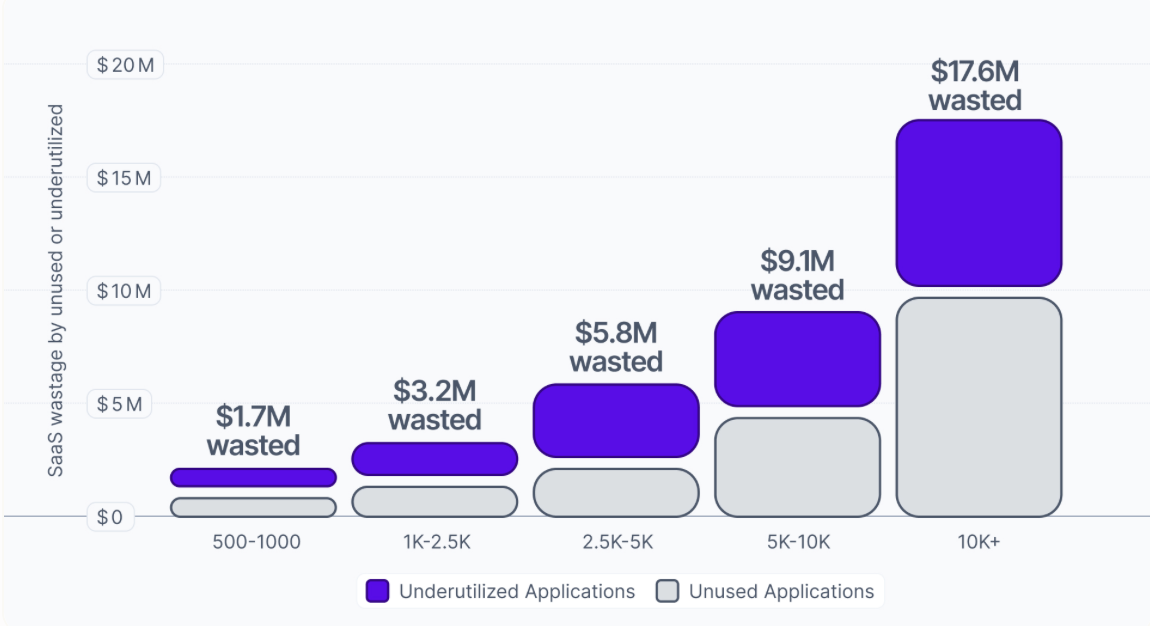
The right outsourced procurement provider will not only pinpoint and recover these savings opportunities, but they will also ensure that every contract going forward is optimized to align with your current and future needs.
By leveraging benchmarking data, their own negotiation expertise, and real-time market knowledge, Procurement as a Service providers are able to secure the very best terms and pricing on all of your contracts.
Take a look at how Piano was able to save more than $100,000 on a single contract with Vertice.
- Time savings
As companies look to achieve more with less, procurement teams are under immense pressure to drive greater value across the business. This involves moving beyond just tactical purchasing towards more strategic initiatives – managing risk, ensuring compliance, improving supplier diversity, optimizing contracts, and achieving cost control.
But while expectations are rising, resources often aren’t.
As a result, many teams simply aren’t able to prioritize these initiatives, as their time is consumed by manual processes and the administrative burden associated with contract management and negotiations.
Even then, there’s rarely enough time to focus on getting maximum value from every contract being subscribed to – for software alone, the average organization uses 138 applications, a figure that is growing by 5% each year.
Outsourcing all or part of the procurement function is one way to relieve this pressure – giving teams the hours back in their day to focus on driving strategic outcomes, strengthening supplier relationships, and uncovering hidden opportunities for savings and innovation.
See for yourself how tech talent software company, A.Team, saved 115 hours on negotiations in just three months by partnering with Vertice.
- Negotiation expertise
For organizations managing a significant SaaS procurement portfolio – typically those spending $500,000 or more per year on software subscriptions – this expertise is particularly impactful. Procurement managed services providers with deep SaaS benchmarking data (such as Vertice's database of thousands of transactions) can identify pricing anomalies, surface better contract structures and negotiate from a position of genuine market intelligence – rather than the general negotiation tactics available to in-house teams.
- Faster procurement cycles
Outsourced procurement offers a significant advantage in accelerating procurement cycles, enabling organizations to acquire goods and services far more quickly and efficiently.
By utilizing advanced procurement software, providers can streamline intake management, automate approval workflows and track and manage renewals. This not only reduces manual intervention and eliminates the subsequent delays, but it also helps to improve visibility throughout the entire procurement process.
Leading procurement platforms support intake-to-procure workflows – from purchase requisitions and purchase orders through to invoice processing – giving finance and procurement teams real-time spend visibility and KPI tracking across all suppliers.
See for yourself how Le Collectionist was able to accelerate their procurement cycles by as much as 55% with Vertice.
- Greater compliance
Procurement as a Service solutions can help to drive greater compliance with internal procurement policies, regulatory requirements, and contractual obligations. By standardizing procurement workflows and introducing approval controls and audit trails, these platforms help to reduce the risk of maverick spending, shadow IT and potential contractual risks.
Robust risk management is a core element of any mature PaaS offering – helping organizations proactively identify supplier risks, enforce policy compliance, and maintain audit-ready records across every category of spend.
Procurement as a Service vs Traditional Procurement
The traditional procurement model involves managing all procurement activities in-house, relying on internal resources. In contrast, Procurement as a Service leverages external expertise and technology for more efficient operations.
Why procurement as a service isn’t replacing procurement teams
Procurement as a Service solutions aren’t designed to replace internal procurement teams, but rather enhance their capabilities and efficiency.
By providing flexible and scalable support, procurement software as a service providers such as Vertice act as strategic partners, bringing in specialized skills, advanced technologies, and market intelligence that internal teams don’t necessarily have.
The bottom line is, by leveraging the expertise and infrastructure that these solutions provide, organizations can optimize their procurement functions, streamline processes, and make far more informed purchasing decisions – all without sacrificing control or visibility.
Considerations when adopting Procurement as a Service
While the benefits of the PaaS model are significant, there are practical considerations any organization should address before choosing a procurement service provider:
- Integration with existing systems: Your procurement managed services provider should integrate cleanly with your existing ERP, finance systems, and contract tools. At Vertice, we support integrations with NetSuite, Xero, QuickBooks, Ironclad and Jira – ensuring no duplication of effort.
- Data security and confidentiality: You will be sharing sensitive commercial data with your provider – including contract terms, vendor pricing and spend data. Ensure your provider has robust data governance, appropriate access controls and clear contractual commitments around data use.
- Scope clarity: PaaS providers vary widely in what they manage – from purely advisory or outsourcing procurement negotiations through to full intake-to-pay management. Define the scope before you engage, so expectations on both sides are aligned.
- Change management: Internal stakeholders – particularly those used to running their own purchasing decisions – may need to be brought along on the journey. The best PaaS implementations start with a clear communication plan for procurement requestors.
Common use cases for procurement software as a service
The fact that the procurement as a service sector is growing speaks volumes about the number of companies turning to third-party providers to support their procurement initiatives, control rising costs, and improve process efficiency.
Some of the specific use cases for procurement software delivered as a service include:
Managing rising software costs
Not only does SaaS now account for 12.5% of total organizational spending, but software prices are also rising at a rate of 11% annually – significantly outpacing general market inflation.
This rapid increase, combined with expanding tech stacks, fragmented purchasing processes, and auto-renewal traps, makes it increasingly difficult for organizations to maintain visibility and control over their software budgets.
Procurement Software as a Service providers help mitigate the impact by centralizing software purchasing, tracking license utilization, keeping track of renewals, identifying redundancies, and negotiating the best possible terms and pricing on any contract.
See how one company achieved average software savings of 32% by partnering with Vertice, along with an 800% return on their investment.
Tail Spend Management
With procurement teams under immense time-constraints, the lower-value goods and services procured across an organization often fall through the cracks. The problem is, these overlooked purchases – referred to as tail spend – can quietly accumulate into a significant portion of a company’s total procurement costs.
Procurement as a Service solutions provide teams with the tools and expertise to regain control of this tail spend. In addition to offering much-needed visibility, they can also:
- Identify duplicate tools and subscriptions that can be consolidated
- Pinpoint applications and services that are unused or underutilized
- Renegotiate contracts for improved terms and cost savings
- Optimize regular purchases such as office supplies, by leveraging volume discounts and preferred vendor agreements
- Centralize all purchases, regardless of value, to reduce maverick spending
By outsourcing the management of this tail spend, companies ultimately benefit from greater cost savings, reduced procurement risk, and increased operational efficiency – freeing internal teams to focus on more strategic initiatives.
M&A procurement integration
Following mergers and acquisitions, the process of aligning procurement functions is both complex and time-sensitive. To support this critical phase, Procurement Software as a Service providers play a key role in accelerating integration and unlocking value across the newly combined organization.
They specifically help by:
- Conducting a thorough spend analysis to uncover areas of duplication and inefficiencies
- Consolidating contracts
- Rationalizing the supplier base to eliminate redundancies and negotiate more favourable agreements – leveraging pricing intel and economies of scale
- Advising on vendor sourcing using peer benchmarking data and market expertise
- Aligning procurement policies, tools and systems for smoother integration
Evaluating procurement as a service providers
As with any business process outsourcing (BPO) solution, there are a number of different procurement-as-a-service companies on the market. Taking the time to evaluate your options is key to choosing the right provider.
With this in mind, here are some of the key factors you should be considering:
- The platform’s capabilities – The right procurement as a service solution will go beyond handling negotiations on your behalf, it should also offer robust technology for streamlining procurement processes, optimizing spend, and managing indirect procurement contracts. When evaluating potential providers, assess the full breadth of their capabilities across procurement and spend management. It’s also important to determine how flexible and customizable their workflows are, to ensure the platform can scale with your company’s growth and evolving needs.
- The quality of their data – The quality and depth of a provider’s benchmarking data is important as it supports purchasing decisions, provides leverage in negotiations, and ensures you’re getting the best value from your contracts. Ideally, partner with a company that provides tailored benchmarking data that is customized to your unique needs and circumstances, as opposed to generic, out-of-the-box intel.
- Whether negotiations are included – Not all procurement as a service providers offer negotiation support as part of their core offering, so it’s important to clarify this early on. In our experience, those that do tend to deliver better outcomes.
- Whether they offer savings guarantees – If you’re trusting a third-party provider to handle part of your procurement function, particularly negotiations, you want reassurance that they deliver a clear return on investment – specifically in the form of cost savings. One way to gain that confidence is by assessing whether the provider offers a savings guarantee, as this can show that they’re committed to delivering measurable value.
- Whether or not they are acting as resellers – Procurement service providers that act as resellers may introduce concerns around pricing transparency and vendor impartiality. In some cases, this model can create conflicts of interest, with providers incentivized to promote certain vendors. Be sure to understand the provider’s business model and whether their role is that of an impartial negotiator or a middleman.
- Whether you will be assigned a dedicated buyer – It’s worth being aware that some companies will assign customers with a dedicated purchasing manager, whereas others will rotate them depending on the tool being negotiated. In our experience, this latter option often creates friction, with the customers having to deal with multiple contacts. What’s more, it typically doesn’t drive the best outcomes.
How Vertice can help you drive strategic value
For any business spending $500k+ annually on software, SaaS procurement is one of the highest-leverage areas for a procurement managed services engagement.
Vertice's approach differs from generalist procurement service providers in three important ways: we bring benchmarking data from thousands of real transactions (not just published list prices), a dedicated team of vendor and sourcing specialists who negotiate on your behalf, and a platform that gives your team full visibility into every renewal, contract and saving. The result: customers consistently save 20%+ on SaaS spend, and many recover savings on individual contracts that exceed their entire annual investment in the service.
See for yourself how we helped one company save 115 hours on contract negotiations in the space of a few months, or how we saved another $155,000 on a single contract.
Alternatively, take a self-guided tour of our platform to get a better idea of how we can help you simplify your procurement efforts.
.webp)