
See how simple procurement can be

What Is Source to Contract? Process, Benefits and How It Works
Source-to-contract (S2C) is the end-to-end set of procurement processes that takes an organization from identifying a need through to a signed supplier agreement, sitting at the strategic upstream of procurement. Done well, it means entering every negotiation with better data than the supplier and building contracts that hold value over their full lifetime rather than just at signing.
If you've ever watched a procurement cycle drag on for months - requirements circulating in emails, supplier quotes scattered across inboxes, contract drafts lost in review - you already know what source to contract is trying to fix.
Source to contract (S2C) is the end-to-end set of procurement processes that takes an organization from identifying a need all the way through to a signed supplier agreement. It sits at the strategic upstream of procurement, and when it runs well, it creates the conditions for better supplier relationships, stronger contracts and meaningful cost savings downstream.
This guide explains what S2C actually involves, how it differs from related procurement frameworks and what separates teams that get real value from it from those that treat it as paperwork.
What is source-to-contract?
Source to contract (S2C) is the strategic process of identifying, evaluating and formalizing supplier agreements. It covers the "upstream" procurement lifecycle – starting with a needs analysis and ending once a contract is awarded, covering everything from market research and negotiation to the initial setup of contract management.
While S2C is sometimes called "source-to-award," the goal remains the same: selecting the right suppliers on the best possible terms.
S2C vs. P2P: A Simple Distinction
- Source to Contract (S2C): The strategic work of selecting vendors and agreeing on terms.
- Procure-to-Pay (P2P): The operational work of executing orders and payments against those terms.
Historically, teams managed this via spreadsheets and email. However, modern procurement now relies on source to contract software to digitize the workflow. An S2C platform acts as a single source of truth, moving data seamlessly from the initial request to the final signature. For complex categories like SaaS, moving to a digital source to contract solution is the only way to enable a "front door" approach that stays organized at scale.
The "front door" problem: Why S2C needs intake management
Most Source-to-Contract failures don't happen at the negotiation table; they happen at the point of entry. When the "front door" to procurement is a confusing mix of Slack messages and spreadsheets, the S2C cycle is doomed before it begins.
This is why intake management has become a critical discipline within the S2C framework. It serves as the formal, digital "front door" for the entire organization. By centralizing how requests are made, you ensure that every S2C cycle starts with:
- Structured data: No more chasing stakeholders for basic requirements.
- Automatic triaging: Requests are routed to the right person (IT, Legal or Finance) instantly.
- Immediate visibility: Procurement can see what’s coming down the pipe before the contract is already on their desk.
Without a robust intake management process, S2C remains a back-office administrative task. With it, S2C becomes a proactive Intake-to-Procure workflow that drives speed and compliance.
The source-to-contract process step by step
While the exact steps vary depending on the size of the organization and the nature of the purchase, most S2C processes follow a common sequence.
1. Intake and needs analysis
S2C doesn’t start in the procurement department; it starts with an employee request (or purchase requisition). A robust Intake-to-Procure workflow ensures that as soon as a need is identified, it is captured in a structured way. This prevents 'shadow IT' and ensures that the sourcing process begins with full visibility into the requester's requirements and budget availability.
2. Market research and supplier sourcing
With requirements defined, procurement teams research the supplier market. The aim is to produce a credible shortlist of vendors capable of meeting the need. This involves evaluating potential suppliers on factors including financial stability, track record, scalability and – particularly relevant in SaaS procurement – pricing benchmarks against what comparable organizations actually pay.
3. RFx process
The RFx stage formalizes how the organization invites and evaluates competitive bids, and is usually run through dedicated RFx software. Depending on the category and complexity:
- An RFI (request for information) is used when the market is unfamiliar and the team needs to understand what suppliers can offer before committing to a more formal process.
- An RFP (request for proposal) invites suppliers to propose solutions, pricing and terms. It is the standard approach for higher-value or more complex purchases.
- An RFQ (request for quotation) is used when specifications are fixed and price comparison is the primary objective.
The RFx process should be structured enough to allow like-for-like evaluation but not so rigid that it discourages suppliers from making creative proposals where those would add value.
4. Negotiation and supplier selection
Contract negotiation is where much of the commercial value of S2C is either captured or lost. Teams that enter negotiations with concrete data – benchmarking information on market rates, insight into the supplier's pricing model, clarity on their own walk-away position – consistently achieve better outcomes than those negotiating on instinct alone. Sourcing strategy built on spend analysis and market intelligence is what separates reactive procurement from a genuinely value-creating function.
Supplier selection should weigh total value rather than headline price: delivery reliability, support quality, integration capability, and the long-term dynamics of the vendor relationship all matter.
5. Contract award and onboarding
Once a supplier is selected and terms agreed, the contract is formalized and the supplier onboarding process begins. This phase should establish clear communication channels, document obligations on both sides, and set up the monitoring framework that will govern contract lifecycle management going forward. Poorly executed onboarding is one of the most common reasons that well-negotiated contracts fail to deliver their promised value.
Source to Contract vs. related procurement frameworks
S2C is frequently confused with adjacent procurement terms. The distinctions matter because they affect how teams are structured, what tools they use and where ownership sits.
For SaaS-heavy mid-market and enterprise organizations, the lines between these frameworks are particularly fluid.
Software contracts renew frequently, pricing changes year on year – Vertice's data shows that 2026 SaaS inflation currently sits at 13.2% – and supplier relationships require active management between cycles. The organizations that manage software procurement most effectively treat each renewal as a mini S2C cycle in its own right.
The real benefits of a strong S2C process
Transforming procurement into a strategic powerhouse
Beyond simple compliance, a robust S2C process turns procurement from a "back-office" administrative function into a driver of business velocity. By centralizing intake and sourcing, you eliminate the "procurement bottleneck."
When stakeholders have transparency into where their request sits in the pipeline, the friction between departments disappears. This shifts procurement’s role from a gatekeeper to a strategic partner that helps the business acquire the tools it needs faster and drive tangible value.
Cost savings through data-backed negotiation
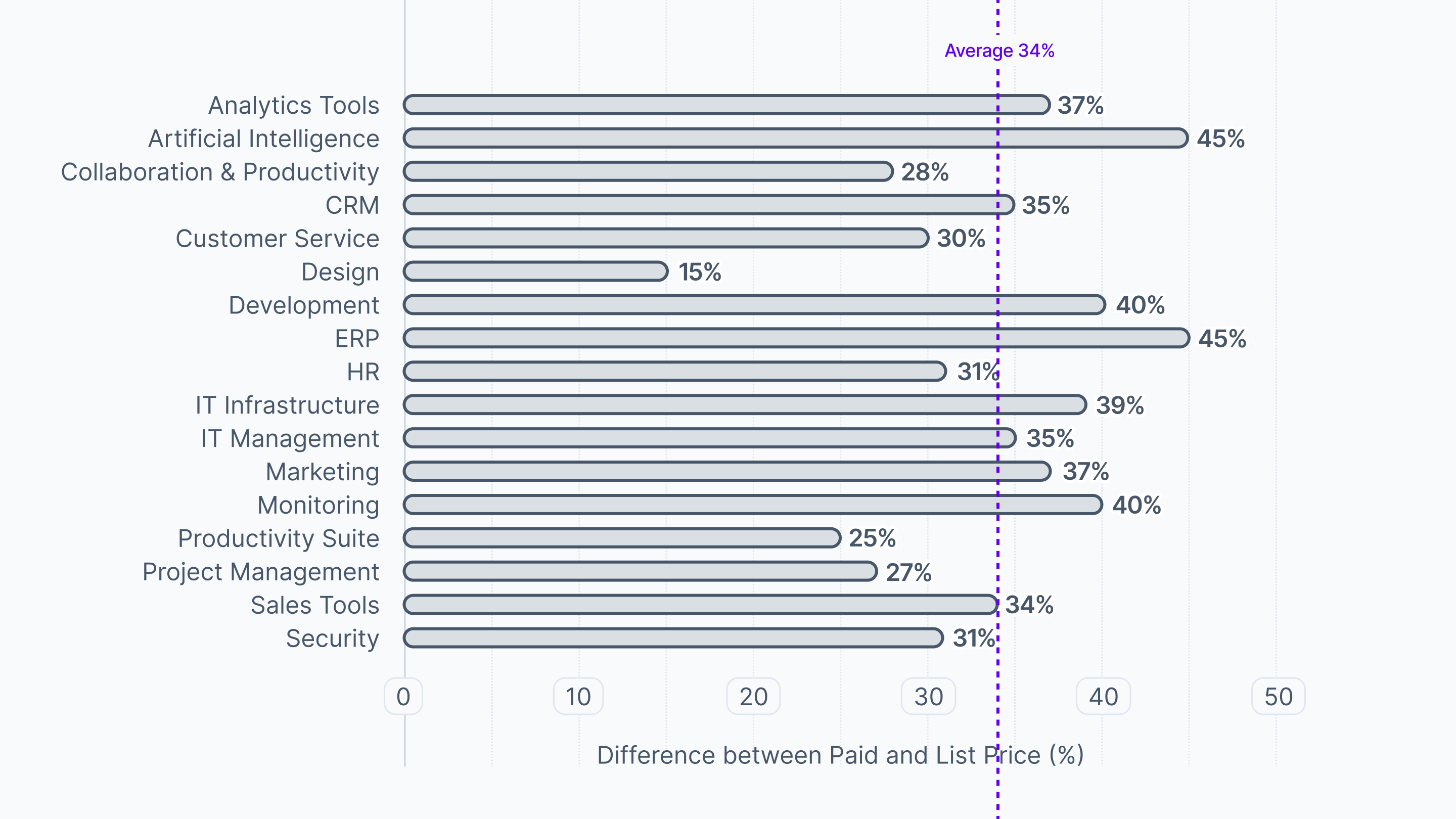
Procurement teams with access to benchmarking data – what comparable organizations pay for the same software, services, or goods – negotiate from a structurally stronger position. The difference between a team that knows the market rate and one that does not often determines whether a supplier discount of 5% or 45% is achievable. Spend analysis before the sourcing process begins is what makes this leverage possible.
Maverick spend reduction
Without a structured S2C process, purchases happen outside sanctioned channels. Teams buy software on personal cards, contracts are signed by people without authority and vendor management is effectively impossible. A disciplined S2C workflow – with defined approval paths and a centralized contract register – closes most of these gaps.
Stronger contract terms
Contracts drafted after a thorough S2C process are more likely to reflect genuine requirements, include protections against auto-renewal and price escalation, and establish the performance metrics that give the organization recourse if a supplier underdelivers.
Contract lifecycle management tools that flag renewal dates and surface contract obligations also prevent the slow drift between what was agreed and what is being paid.
Spend visibility and better forecasting
A well-run S2C process generates structured data at every stage – supplier shortlists, bid comparisons, negotiation records, contract terms. Over time, this creates an audit trail that directly improves spend visibility and informs future sourcing cycles. Finance teams can forecast with greater accuracy. Procurement teams can identify consolidation opportunities.
Vertice's intelligent procurement workflows are built to support exactly this - centralizing the S2C process so that data from every sourcing cycle feeds into better decisions the next time round.
Making source-to-contract work in practice
Most procurement teams understand what good S2C looks like in theory. The challenge is execution – particularly in organizations where procurement is under-resourced, where SaaS buying is decentralized, or where stakeholder management across finance, IT and legal is inconsistent.
Start with spend analysis
Before launching a sourcing event, understand what you are currently spending and with whom. Spend analysis surfaces consolidation opportunities, flags redundant vendor relationships and provides the baseline against which post-negotiation savings can be measured. Without it, the sourcing strategy that follows is built on incomplete information.
Use structured RFx processes, even for renewals
Many organizations apply rigorous RFx processes to new supplier selection but treat renewals as formalities. But thisis where significant value leaks out.
Renewal cycles are the primary negotiation opportunity for SaaS contracts – treating them as a procurement event, with a proper supplier performance review and a structured negotiation approach, consistently produces better outcomes than waiting for contracts to auto-renew. Vertice's data shows that companies that begin initiate negotiations 90+ days ahead of deadline achieve an average of 36% greater savings than those waiting until the 30-day mark.

Bring in benchmarking data
The single biggest lever in contract negotiation is knowing what a fair price looks like. Procurement automation tools that aggregate pricing data across thousands of transactions give teams a credible reference point in negotiations. Without that, the supplier always has more information than the buyer.
Vertice maintains a live database of pricing and terms across 32,000+ vendors, which its expert buying team uses directly in negotiations on behalf of clients. More on the SaaS purchasing platform here.
Close the loop with contract lifecycle management
Source to contract ends at signature, but value creation does not. CLM tools that track contract performance, flag renewal dates 90-120 days in advance, and surface obligations on both sides ensure the work done during the S2C process actually translates into delivered value. Without this, well-negotiated contracts quietly erode as renewals go unreviewed and price escalations go unchallenged.
For a broader view of how Vertice approaches procurement, explore the SaaS procurement resources hub.
Source to Contract as a commercial discipline
Source to contract is not a compliance exercise. For any organization spending seriously on suppliers - and particularly on SaaS - it is one of the highest-return activities a procurement or finance team can invest in.
Done well, S2C means entering every negotiation with better data than the supplier, writing contracts that hold value over their lifetime, and building supplier relationships that deliver genuine operational value. Done poorly, it means paying list price, missing renewal windows, and working with contracts that were never well-defined in the first place.
If you want to understand what a stronger S2C process could mean for your SaaS spend specifically, explore Vertice's approach to SaaS procurement.
Alternatively, see Vertice in action for yourself by either scheduling a demo or taking an interactive product tour.
Source-to-Contract
FAQs
Source to contract covers the upstream process from identifying a need to signing a supplier agreement. Source to pay extends further downstream to include the operational procurement steps after contract award - purchase orders, goods receipt, invoicing and payment. S2C is the strategic front end, encompassing intake-to-procure (I2P); S2P is the full end-to-end cycle.
Procure-to-pay begins where source to contract ends. P2P covers the transactional stages of procurement – raising purchase orders against existing contracts, processing invoices, and making payments. The two processes are complementary: S2C creates the contracts and supplier relationships that P2P then executes against.
SaaS procurement has specific characteristics that demand a slightly different S2C approach: contracts renew annually, pricing is inconsistent and negotiable, and suppliers regularly introduce price increases that go unchallenged at renewal. Effective SaaS S2C treats each renewal as a sourcing event, relies on market benchmarking data to inform negotiations and uses contract lifecycle management to ensure renewal windows are not missed.
Procurement orchestration acts as the "glue" between the disparate stages of the S2C lifecycle. While source-to-contract defines the strategic steps – from sourcing to signing – orchestration is the technology layer that manages the complex handoffs between stakeholders like IT, Legal and Finance. By automating these cross-functional workflows and centralizing intake management, procurement orchestration eliminates the manual bottlenecks that typically stall the contract award process. This ensures a seamless intake-to-procure experience where data flows instantly from the initial request through to the final signature, keeping the entire business aligned and moving at velocity.
.webp)