
See how simple procurement can be

SaaS Sprawl
Is your software stack growing faster than your ability to manage it?
For many companies, it’s an issue costing them millions of dollars every year. Software gets procured (not always with oversight), tools get forgotten, licenses get abandoned, and before you know it, they are faced with unnecessary costs and serious risks.
This unchecked growth and fragmentation is what’s referred to as SaaS sprawl, a challenge that quietly inflates costs, creates redundancies and makes it difficult for teams to maintain visibility across their software ecosystem.
Key takeaways:
- SaaS sprawl leads to redundant tools, wasted budget and significant security vulnerabilities.
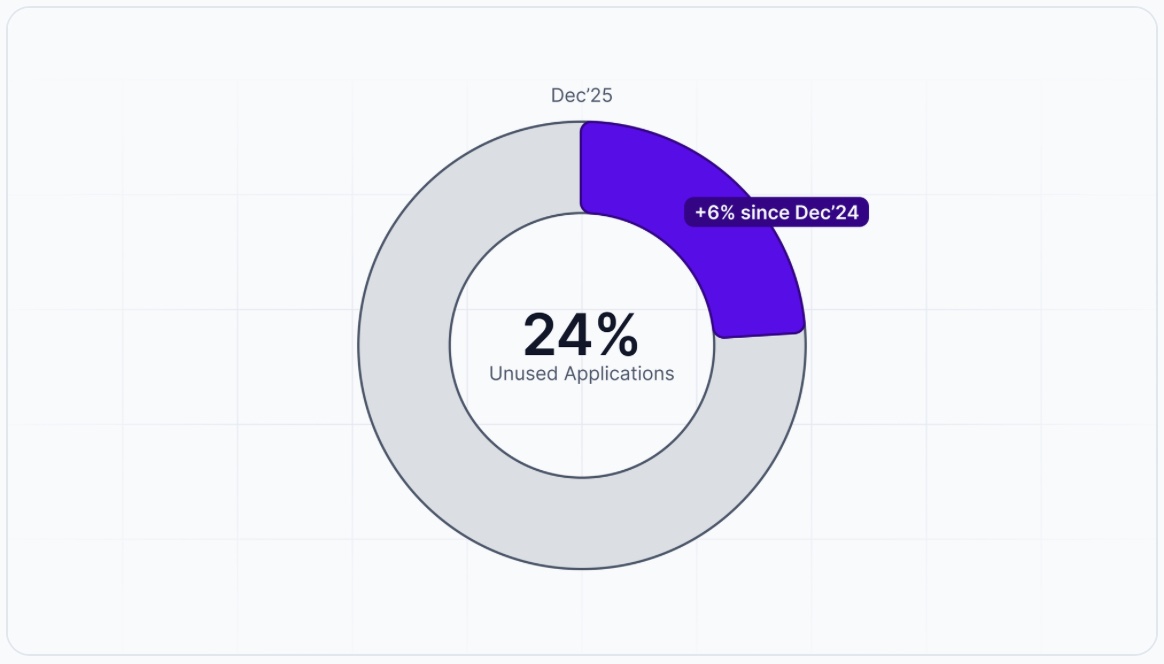
- Organizations typically waste 24% of their SaaS budget on unused applications.
- AI-powered automation is now essential to identify redundant licenses and prevent unauthorized "shadow IT".
- Effective cost control requires a single front door for all intake requests to ensure compliance and budget oversight.
What is SaaS sprawl?
SaaS sprawl refers to the rapid and often undocumented growth of an organization’s software portfolio. Not only is the average company increasing the size of its stack by 5% YoY, but many still lack centralized visibility and governance over how tools are purchased.
As a result, individual employees bypass IT, procurement and even finance to adopt new software, creating redundancy, security risk and wasteful spending.
Some of the common reasons for this include:
- The proliferation of AI software: AI has accelerated innovation – and software chaos along with it. So much so that corporate spending on these tools has risen 300% in just one year, contributing to further sprawl.
- Tool proliferation in modern work environments: As organizations rely on specialized SaaS for collaboration, analytics, automation and AI-driven workflows, the number of point solutions grows faster than visibility or control.
- Low friction to adoption: Free trials, self-serve pricing and the ability to purchase on company cards make many SaaS tools easy to procure. The problem is, these same tools often get forgotten and end up being subject to unwanted auto-renewals and hefty price uplifts – contributing to the 24% of unused tools that exist within the average SaaS stack.
Left unchecked, software sprawl impacts every facet of the business by increasing costs, creating data security silos and reducing overall productivity.
Why SaaS sprawl is a growing problem
The scale of SaaS adoption is increasing at an unsustainable rate for manual management. Research indicates that the average company now uses over 136 SaaS applications, yet approximately 24% of these tools go completely unused and many more underutilized.
This unmanaged growth creates a "visibility gap" where procurement and finance leaders lose track of exactly what is being paid for and who is using it. This lack of oversight results in:
- Auto-renewal traps: Contracts renew automatically because they weren't flagged. According to Vertice’s data, 78% of tools constituting tail spend get renewed without review.
- Compliance risks: Sensitive data may be processed by SaaS applications that have not undergone a formal security review.
- Budget overruns: SaaS inflation and duplicate licenses drain departmental budgets faster than anticipated.
Key causes of SaaS sprawl
Understanding the root causes of unmanaged growth is the first step toward controlling SaaS sprawl. Most organizations struggle with these five primary drivers:
- Shadow IT: This occurs when employees use multiple SaaS applications without the knowledge or approval of the IT, finance or procurement functions.
- Lack of renewal visibility: Without a centralized SaaS management tool, teams often miss the 30- or 60-day notice periods required to cancel or renegotiate contracts. They also miss out on the 37% greater savings that are possible when renewing 90 days prior to deadlines.
- Unmonitored free Trials: Employees often sign up for trials using work emails, and these "forgotten" accounts eventually become hidden line items on corporate expense reports.
- No Single Source of Truth: Spend data is often fragmented across different ERPs, accounting systems and spreadsheets, making it impossible to see the total tech stack in one view.
- Overlapping functionality: Different departments may pay for separate tools that do the same thing, such as three different project management platforms or multiple file-sharing SaaS apps.
The business impact of SaaS sprawl
The cost of unmanaged growth is not just financial; it is operational and strategic. When a company has a bloated SaaS environment, it faces several critical challenges:
Financial impact: Wasted spend and inflation
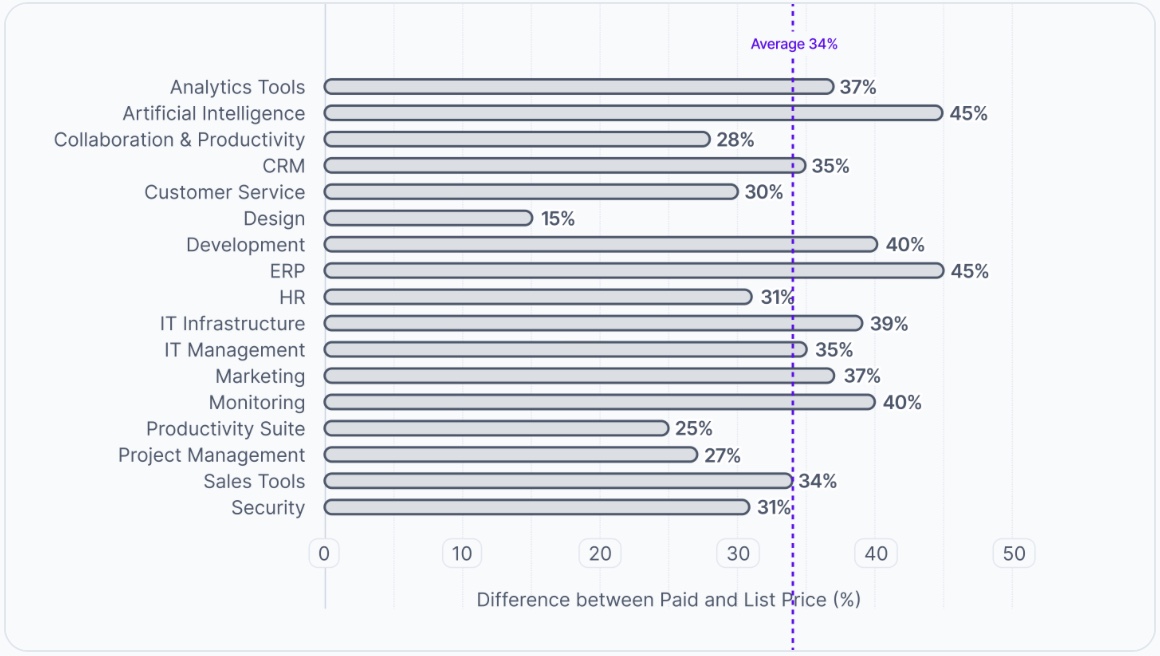
Unmanaged sprawl leads directly to rising costs. Duplicate licenses and "shelfware" (software that is paid for but not used) can account for nearly a third of a company's software budget. Furthermore, without SaaS purchasing expertise, companies often pay significantly above market-leading rates.
Operational impact: Inefficiency and silos
When teams use different SaaS tools for the same tasks, it creates data silos. Information does not flow seamlessly between departments, leading to rework and communication breakdowns. Additionally, the manual burden on IT and legal teams to review hundreds of individual requests is overwhelming.
Compliance impact: Security vulnerabilities
Every new application represents a potential entry point for a data breach. SaaS sprawl often bypasses security and compliance risks assessments, leaving sensitive data exposed in unvetted environments. Without a centralized procurement orchestration software platform, it is almost impossible to maintain a full audit trail of who approved which tool and when.
AI's role in tackling SaaS sprawl
Traditional SaaS management relies on manual spreadsheets that are outdated the moment they are saved. Modern solutions, however, use AI to provide continuous, real-time oversight.
AI procurement platforms, like Vertice, utilize a vast network of specialized agents to automate the most complex parts of procurement.
- Identifying redundancy: AI agents can automatically detect duplicate subscriptions across different departments before they drain your budget.
- Usage analysis: By monitoring SSO data and login trends, AI can flag underutilized licenses, allowing you to "right-size" contracts during the next renewal cycle.
- Predictive insights: AI can forecast usage trends and highlight potential consolidation opportunities, suggesting where multiple tools could be replaced by one unified platform.
- Smart document extraction: AI instantly extracts contract details from uploaded PDFs, ensuring that every renewal date and notice period is captured without manual data entry, and that the relevant stakeholders can review faster.
How to control SaaS sprawl
1. Audit your entire software portfolio
Start by gaining full visibility into all software used across the organization. This requires connecting to your SSO identity provider (like Okta or Azure) and your ERP or accounting systems (like NetSuite or Workday) to uncover undocumented "shadow IT".
2. Centralize spend and contract data
Move all contracts, order forms and invoices into a centralized document repository for total contract management. This creates a single source of truth for every SaaS tool, ensuring that procurement, finance and legal teams are all looking at the same data.
3. Implement a "Single Front Door" for intake
Require all new spend requests to go through a unified intake process. By using dynamic intake forms, you can collect the right information upfront and route requests to the correct stakeholders based on risk and budget thresholds.
4. Automate renewals and approvals
Stop the cycle of unwanted auto-renewals by setting up automated notifications for upcoming expiries. Use interactive approval chains that allow stakeholders to action requests directly in Slack or Microsoft Teams, reducing bottlenecks and speeding up the purchasing cycle.
5. Create clear governance policies
Assign an owner to every SaaS application to ensure accountability for usage and budget management. Establish a clear policy for when new tools can be added and when existing ones must be consolidated.
Benefits of reducing SaaS sprawl
Controlling SaaS sprawl delivers immediate and long-term value to the enterprise. Organizations that successfully manage their software stacks see:
- Significant cost savings: The average Vertice customer achieves a 20% reduction in SaaS costs by eliminating duplicate licenses and shelfware.
- Stronger security and compliance: By ensuring every tool undergoes a formal third-party risk management (TPRM) review, you protect sensitive data and maintain regulatory compliance.
- Better vendor management: Consolidating your stack gives you more leverage in negotiations with key vendors, as you are managing larger, more strategic contracts rather than dozens of small ones.
- Streamlined employee transitions: Clear visibility into SaaS apps makes it easier to provision and deprovision licenses when employees join or leave the company, reducing security risks and license waste.
SaaS sprawl and spend optimization
Reducing sprawl is a prerequisite for true spend optimization. You cannot optimize what you cannot see. By centralizing visibility, you increase the amount of "spend under management," which allows for more accurate forecasting and budgeting.
A unified platform like Vertice connects renewal management with real-time spend data. This allows finance leaders to see not just what was spent yesterday, but what is committed for the next 12 months. This deep visibility is the foundation for driving SaaS inflation adjustments and optimizing SaaS costs.
The future of SaaS management
The era of manual SaaS management is ending. The future belongs to intelligent procurement orchestration. Here are a few things we expect to see:
- AI-led consolidation: Autonomous agents that continuously scan for overlapping functionality and recommend tool replacements without human intervention.
- Automated vendor benchmarking: Real-time access to global pricing data will become standard, ensuring companies never overpay for SaaS tools again.
- Continuous compliance: Security and risk monitoring will move from a "point-in-time" review at onboarding to a continuous, AI-driven process.
SaaS sprawl is a natural byproduct of rapid growth, but it does not have to be an inevitable drain on your resources. By understanding the causes and leveraging AI-powered automation, you can regain control of your tech stack.
With total cost control and a centralized intake-to-procure process, organizations stand to bring governance to chaos. Vertice provides the "single front door" and intelligent orchestration needed to eliminate manual tasks and guarantee savings.
.webp)