

SaaS Wastage: The True Cost of Shelfware & Underutilized Software


Take a self-guided tour of the platform.
How much are you wasting on SaaS?
See why Vertice is trusted by top procurement leaders.
Get the latest industry benchmarks, identify hidden costs, and learn how to optimize your SaaS spend – fast.

Article Summary
SaaS wastage is unnecessary software spend caused by unused licenses, overprovisioned seats and unapproved shadow IT tools. Shelfware syndrome, where software is bought but never properly deployed or adopted, affects 16.3% of applications, and Vertice data shows a further 41.1% are underutilized, with organizations using less than half the licenses they pay for. With stacks growing 5% a year, wastage in large enterprises rose 34% in a year. Reducing it needs visibility into usage, contract terms and renewal dates, plus metrics such as license utilization and spend per employee.
SaaS wastage: The hidden cost of unused software
SaaS shelfware is quietly draining IT budgets across almost every industry. As tech stacks expand, so does the risk of paying for these tools that sit idle – something already happening with 16.3% of applications.
This quiet form of waste is often referred to as shelfware syndrome; a growing issue in modern software procurement, where tools are purchased, only to be forgotten.
But shelfware is only part of the problem.
Even when subscriptions are technically active, many aren’t being used to their full potential. Our own data shows that an additional 41.4% of applications are underutilized, with organizations using less than half of the licenses they're paying for.
This combination of unused and underutilized tools contributes to a growing problem of SaaS wastage. And it's one that procurement and finance teams can no longer afford to overlook.
What is shelfware syndrome?
Shelfware syndrome occurs when software is bought but never deployed, fully implemented or widely adopted. This typically happens when procurement decisions are made without clear implementation plans, user training or ongoing engagement.
The result?
Wasted budget, bloated tech stacks and a disconnect between spend and value.
In the SaaS world, shelfware is especially rampant due to the ease of purchasing and scaling software. But without proper tracking and utilization metrics, companies end up paying for software that adds no real operational value.
SaaS wastage and shelfware benchmarks
SaaS wastage refers to the unnecessary or inefficient spending on software – largely caused by unused licenses, overprovisioned seats or unapproved tools that constitute Shadow IT.
But as SaaS stacks grow by an average of 5% year-on-year, the problem only intensifies.
More tools + trend of low usage = even more wasted spend.
It’s no surprise, then, that the volume of wastage within the largest enterprises now sits at $20.3m, making this a rapidly escalating issue.

But how does your organization compare?
While many companies suspect they're overspending on SaaS, few have the data to pinpoint how much or where the waste is hiding.
In our latest report, we analyze real-world SaaS usage across wide range of organizations to uncover:
- Which industries experience the highest levels of shelfware syndrome
- How SaaS wastage trends vary by company size and software category
- The types of tools most likely to go unused or underutilized
- Year-over-year shifts in SaaS overspending
These benchmarks provide a clear picture of just how widespread – and costly – shelfware has become.
Want to see how your stack compares to industry peers? Download the full report to access exclusive data and uncover the hidden drains on your software budget.
Why better procurement visibility is key to reducing SaaS wastage
Tackling SaaS waste effectively requires more than just identifying unused licenses – it demands a deeper understanding of how software is purchased, tracked and utilized across the entire organization. This is where Spend Optimization Platforms with procurement analytics capabilities come into play.
These solutions give finance and procurement teams real-time visibility into software usage, contract terms, renewal dates and vendor performance, helping to prevent overbuying, detect redundant tools, and pinpoint underutilized licenses before they become wasted costs.
That visibility pays off most at renewal. Once you know which licenses are going unused, Ana, Vertice's autonomous negotiation agent, can take that usage data into the renewal negotiation and push for a contract sized to what your teams actually use – with your team reviewing its work along the way.
And savings only count if they stick. With Vertice Procure-to-Pay, invoices are matched against contracted terms before they're approved for payment, so a right-sized contract doesn't quietly turn back into an overprovisioned bill. Procurement and finance work from the same record, making software budgets easier to forecast accurately.
Tracking the right procurement metrics is also crucial – from license utilization rates to spend per employee – as this enables organizations to more reliably benchmark performance, monitor trends and take proactive steps to optimize spend.
With clearer data, tighter controls and smarter decision-making, companies can significantly reduce waste while maximizing the ROI of their SaaS investments.
The cost of unused SaaS subscriptions
The impact of SaaS wastage extends far beyond just dollars and cents. It can:
- Put organizations at risk of security vulnerabilities, as unmonitored tools bypass procurement controls.
- Cause operational inefficiencies, with teams working across multiple platforms that serve the same purpose.
- Negatively impact employee productivity and satisfaction, leaving users overwhelmed by redundant tools, unsupported on the platforms they do need or stuck navigating bloated SaaS stacks that slow them down.
But while these can all have a detrimental impact, the financial toll is often the most acutely felt – especially as finance leaders face mounting pressure to keep costs under control and maximize ROI.
So, just how much are companies losing on unused and underutilized software?
The short answer: more than most realize.
Breaking down the real cost of shelfware and underutilized SaaS
From entirely unused software to partially tapped tools that deliver a fraction of their potential value, SaaS wastage is eroding budgets of every size.
And with spend increasing year-over-year, the financial impact is far from trivial.
In our latest report, we reveal exactly just how much is being wasted on everything from overprovisioned collaboration tools to unused enterprise software.
Our benchmarking data goes beyond the surface, pinpointing which software categories are driving the highest levels of inefficiency, while revealing the staggering amounts being lost annually across companies of all sizes and industries – insight that will equip you to identify exactly where the hidden drains on your budget lie.
What’s more, we provide actionable steps on how you can eliminate instances of wasted software spend, helping you achieve maximum cost savings while getting optimal value from your SaaS investments.

Related posts

Join the community

The need-to-knows about Vertice
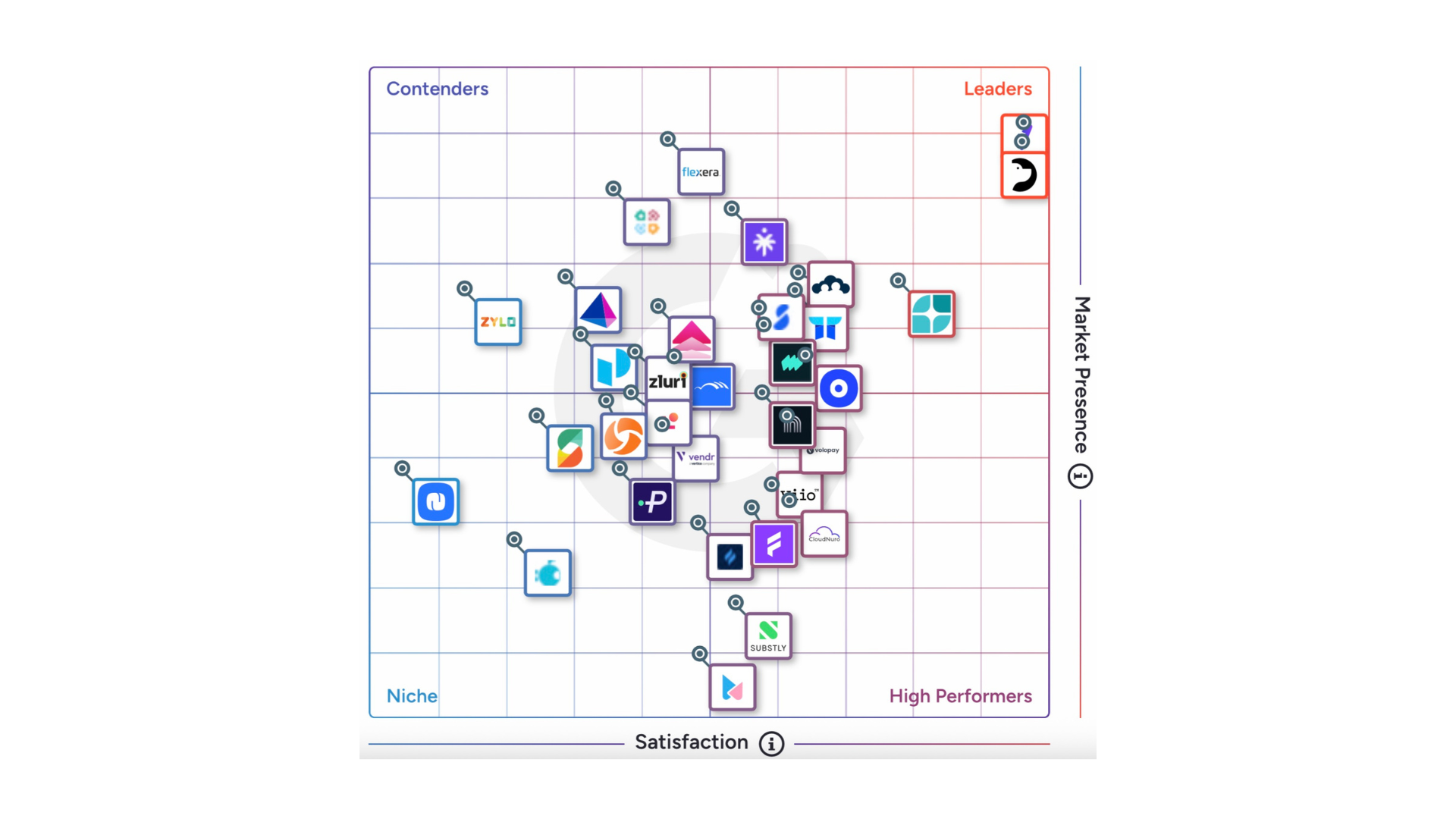
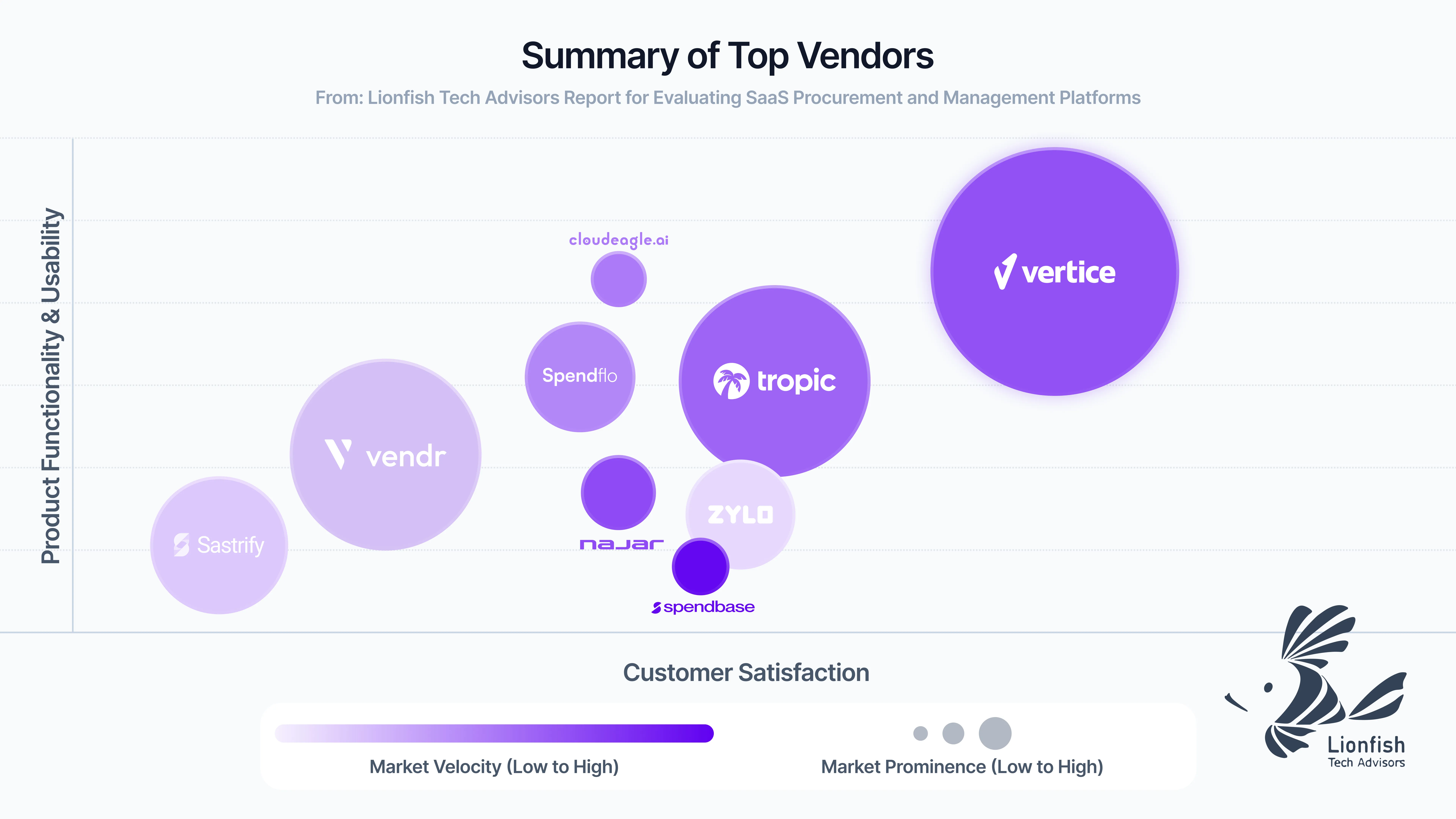
The G2 Summer 2026 Grid names Vertice as the top overall procurement orchestration platform. For organizations building a vendor shortlist, other contenders include Zip, Tropic and ORO Labs. The right choice depends on your focus: while legacy procurement software suites remain essential for physical supply chains, modern orchestration platforms excel at managing indirect spend and parallel approval workflows.
According to the G2 Summer 2026 Grid Report, Vertice anchors the furthest top-right corner of the market, securing the highest combined scores for both Market Presence and Customer Satisfaction. While alternative procurement orchestration tools act as passive ticket queues, Vertice stands out by connecting workflow automation to hard financial ROI – offering embedded agentic AI, an unrivaled pricing dataset, and contractually guaranteed software savings.
The integration of AI in procurement orchestration has shifted platforms from passive workflow trackers into highly autonomous operational systems. A modern, autonomous procurement orchestration platform uses purpose-built software agents to automatically parse contract lines, execute upfront compliance checks, and run real-world pricing benchmarks. This eliminates manual bottlenecks and slashes enterprise procurement cycles in half.
To support thousands of employees across decentralized departments, organizations deploy intelligent procurement orchestration software to serve as a user-friendly "front door" for all corporate spend requests. By streamlining the initial intake orchestration, these tools keep the user experience seamless enough to prevent shadow IT, while silently running strict background compliance, parallel routing, and automated approvals across the entire procurement lifecycle.
Legacy Source-to-Pay (S2P) suites like Ivalua are fundamentally built to be heavy databases (Systems of Record) for complex physical supply chains. When these platforms introduce LLMs, the AI is typically limited to passive tasks like summarizing massive RFPs or parsing old contract lines.
Vertice’s embedded Agentic AI instead functions as a System of Action. Because Vertice operates as an agile orchestration overlay rather than a rigid database, its autonomous agents (like "Ana") execute real-world workflows, run upfront compliance checks, and actively deploy automated negotiation playbooks. While legacy LLMs can only analyze your internal data, Vertice's AI is trained on the world's largest external pricing benchmark dataset, allowing it to actively optimize spend based on global market realities.
The choice between Vertice and Zip comes down to whether your organization needs process control or process control with financial optimization. While Zip is a powerful platform for building custom multi-system ERP routing and complex approval workflows, Vertice provides that exact same enterprise-grade intake orchestration and compliance guardrails, but binds it directly to hard cost reduction.
Powered by an unrivaled vendor pricing dataset, Vertice is one of the only procurement orchestration tools that contractually guarantees a minimum of 20% software spend savings, yielding an average 7x ROI that passive workflow queues cannot match.
For large, enterprise-scale teams, reliability isn't just about software uptime – it is about a platform's ability to eliminate shadow IT by serving as a frictionless "universal front door" while seamlessly enforcing heavy backend compliance.
According to G2’s Summer 2026 Grid Report, Vertice is ranked as the top overall procurement orchestration platform, leading the industry in user adoption, relationship support, and speed of implementation.
To reliably support thousands of employees across decentralized global departments, a platform must handle complex enterprise architecture. Vertice delivers this at scale through three critical capabilities:
- Deep Integration & Parallel Routing: Vertice provides full feature parity with complex process engines like Zip, offering robust, multi-system ERP integrations (including NetSuite, SAP, and Workday) and dynamic, no-code workflows. It routes requests through Legal, InfoSec, Tax, and Finance simultaneously rather than in sequential bottlenecks.
- An Unmatched Enterprise Data Moat: Following its 2026 acquisition of Vendr, Vertice is backed by the world’s largest procurement intelligence dataset, encompassing over $75 billion in global indirect spend across 32,000 vendors. This means large teams aren't just moving tickets; every intake request is automatically cross-referenced against real-world pricing benchmarks from 250,000 negotiated contracts.
- Autonomous Agentic Scaling: Powered by a fleet of over 60 specialized AI procurement agents – including "Ana," an autonomous negotiation agent – Vertice automates manual tasks like parsing contract lines, running upfront risk assessments, and executing automated negotiation playbooks. This allows lean procurement teams to safely scale their operations without introducing organizational chaos.