See how simple procurement can be

S2P vs P2P: The Difference Between Source-to-Pay & Procure-to-Pay
How source-to-pay, procure-to-pay and source-to-contract fit together – and why the gap between them is where contract value leaks.
Key takeaways:
- Source-to-pay (S2P) covers the full procurement lifecycle, from sourcing suppliers to paying their invoices. Procure-to-pay (P2P) is the downstream part: purchase orders, invoice matching and approval for payment.
- Price and terms are set upstream but paid downstream. When the two run in separate systems, invoices get checked against the PO rather than the contract, which leads to invoice drift, missed early-payment discounts and weaker forecasts.
- Vertice runs intake, negotiation, contracts and P2P on one record, so what was agreed is what gets paid.
The difference between source-to-pay (S2P) and procure-to-pay (P2P) is scope. S2P covers everything from sourcing suppliers right through to paying their invoices. P2P is the downstream part: once a purchase is approved and contracted, it raises the purchase order, matches the invoice and approves it for payment.
Put simply, S2P = source-to-contract (S2C) + procure-to-pay (P2P).
The split matters more than the acronyms suggest. Procurement can negotiate a lower rate, a 2% early-payment discount and 60-day terms, but if the invoice is paid in a separate system, the person paying it may never see what was agreed – and the value quietly slips away.
Vertice closes that gap by running intake, negotiation, contracts and P2P on one record, so every invoice is checked against the deal behind it.
What is source-to-pay (S2P)?
S2P is the end-to-end process for buying from suppliers, from identifying a need to clearing the final invoice. It covers both the strategic decisions – who to buy from, at what price and on what terms – as well as the transactional steps that put those decisions into practice.
A typical S2P process covers:
- Spend analysis and need identification: Reviewing what the business already has and identifying what it needs
- Supplier sourcing: Finding suppliers, running RFPs and gathering quotes
- Negotiation: Agreeing price, payment terms, renewal and other contract terms, and discounts
- Contracting: Drafting, approving and signing the agreement
- Supplier onboarding: Security, risk and compliance checks before the first purchase
- Purchase order: Committing spend against the contract
- Receipt: Confirming the goods arrived or the service went live
- Invoice matching and approval for payment: Checking the invoice against what was ordered and agreed
- Ongoing contract and supplier management: Tracking performance, usage and renewals
S2P is typically led by procurement teams, with finance, legal and IT or security involved at different stages. While it applies to both direct and indirect procurement, it matters most for indirect categories such as software, AI, cloud and services, where spend is spread across hundreds of vendors and the biggest savings are often set at the negotiating table.
What is procure-to-pay (P2P)?
Procure-to-pay is the transactional back end of source-to-pay. It kicks in once the purchase has been requested, approved and contracted, and runs until the supplier’s invoice is cleared for payment.
The core P2P steps include:
- Purchase order: The approved purchase becomes a PO setting out quantity, price and terms
- Receipt: The team confirms delivery, or that a license or service is live
- Invoice capture: The supplier’s invoice is received, read and coded
- Invoice matching: Two-way (invoice vs PO) or three-way (invoice vs PO vs receipt) checks, with mismatches held as exceptions
- Approval for payment: The matched invoice is approved and passed to accounts payable, with payment usually executed through the ERP
P2P is almost always led by finance and AP. Its job is accuracy: making sure that whatever was agreed gets paid, on the right terms and against the correct budget.
S2P vs P2P: Key differences
The biggest difference between the two is scope. S2P decides who you buy from and on what terms, while P2P ensures that each purchase is executed and paid on those terms.
Source-to-contract vs procure-to-pay
Source-to-contract (S2C) and procure-to-pay are the two halves of S2P. S2C ends with a signed contract; P2P picks it up from there.
What problems do S2P and P2P solve?
P2P solves:
- Invoices that don’t match POs and pile up as manual exceptions
- Slow approvals that delay payment and strain supplier relationships
- Manual invoice entry, coding errors and duplicate payments
- Low PO coverage, so spend gets committed without a PO
S2P also solves:
- Purchases made off-contract or outside approved suppliers
- Prices agreed without benchmarks, or contracts signed without negotiation
- Suppliers onboarded without security, risk or compliance checks
- Renewals that roll over before anyone reviews them – Vertice’s 2026 data shows that 70% of tail-spend contracts renew without any form of review
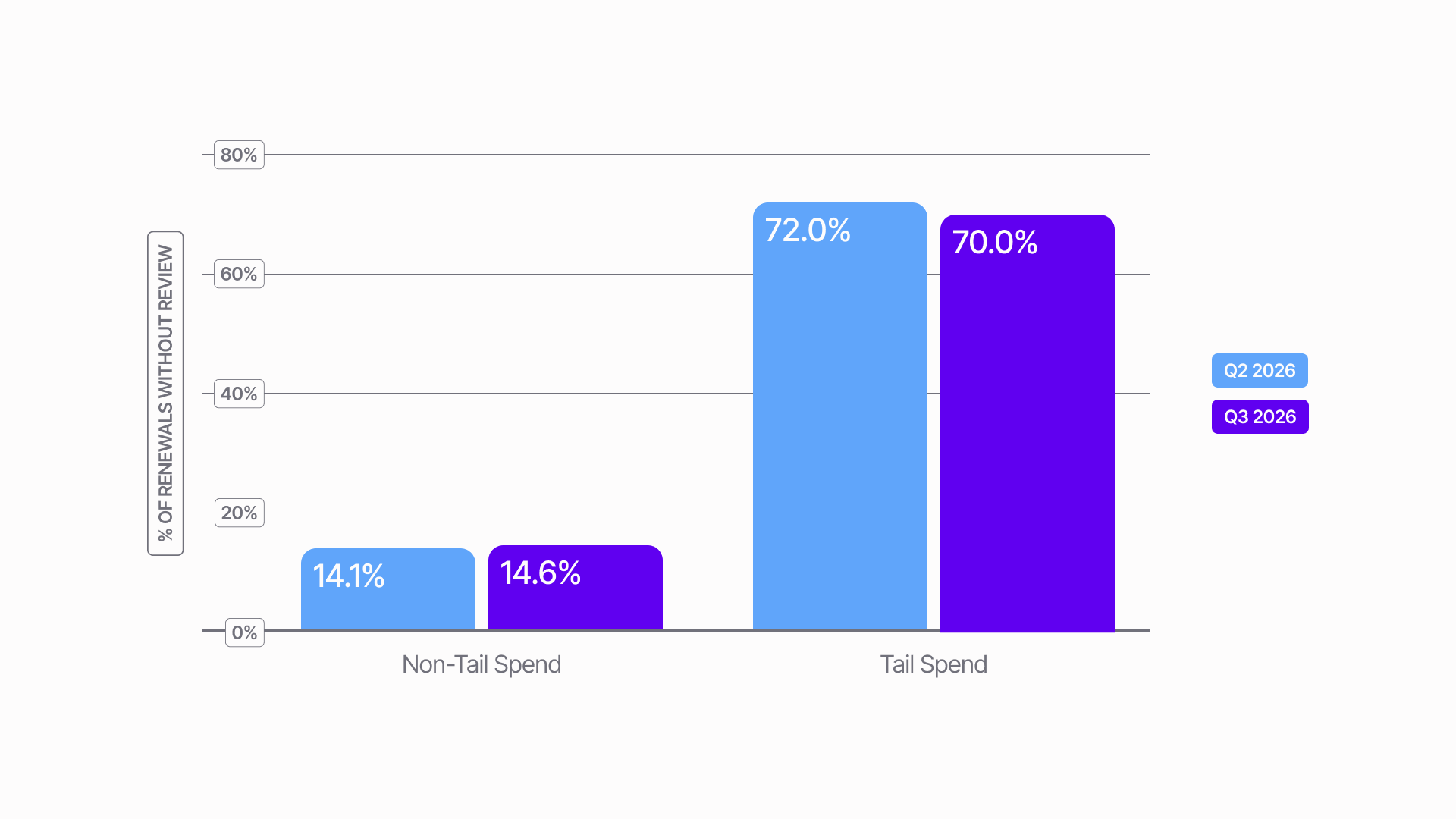
The costliest problems sit between sourcing and paying, where the contract hands over to the PO – which is why it matters whether the whole process shares a record.
Where intake-to-procure fits
Before anything gets sourced, negotiated or paid, someone has to ask for it. Which is where intake-to-procure (I2P) comes in. It’s procurement’s front door: how purchase requests enter the process and get routed through approvals, sourcing, negotiation and contracting.

I2P orchestrates the upstream work, covering everything source-to-contract does but with the addition of intake and approvals. It then hands over to P2P at the purchase order. Combined, I2P and P2P cover the end-to-end procurement lifecycle.
Where source-to-pay leaks value: the handoff to P2P
Procurement negotiates the price and terms, but its involvement usually ends at signature. Finance and AP start with a PO and an invoice, and will often have to track down the contract – taking time that AP rarely has before an invoice is due.
Plus, any negotiation context – why a supplier was chosen, what was traded for a discount – is often missed, so many invoices are only being checked against the PO before they’re paid. This gap shows up as:
- Invoice drift: Charges creep away from agreed rates and still clear, because they match the PO
- Missed early-payment discounts: AP simply doesn’t know they were negotiated
- Suboptimal payment terms: Invoices are paid early or late against terms that nobody downstream can see
- Weaker budget forecasts: Finance plans from invoices, not from committed spend and contract terms
Closing that gap means running the whole source-to-pay process on one record, so every invoice is checked against what was agreed – not just against the PO raised for it.
Routine purchases are less exposed, as guided buying closes the gap earlier. Requesters order from a pre-approved or punchout catalog, so the PO is raised at the contracted price before an invoice exists.
How Vertice closes the gap
With Vertice, the invoice lands on the same record as the deal that authorized it. The contract is negotiated on the platform – either by our team of procurement specialists or with our autonomous negotiation agent, Ana, for tail-spend contracts – so the price, terms and other key information are already attached when the invoice arrives.
Vertice specifically covers the full procurement lifecycle for indirect spend – upstream with Intake-to-Procure and downstream with Procure-to-Pay.
With the deal attached to every invoice, finance teams using Vertice ensure that:
- What was agreed is what gets paid: Invoices are reconciled against POs, contract terms and budgets.
- Payment terms and early-payment discounts are visible: AP can use the terms procurement negotiated instead of missing them.
- Budgets reflect reality: Committed spend, contract terms and context from $75bn of spend across 32,000 vendors feed more accurate, predictive budgets.
See for yourself how Vertice connects procurement and finance on one record by taking a self-guided tour of the platform, or by scheduling a demo.