.webp)

A Quick-Start Guide to Autonomous Negotiation Agents

.jpg)

Autonomous negotiation agents have emerged as one of the most promising applications of AI in the procurement space. Not a chatbot bolted onto an existing tool, but a system that can actually run a negotiation from start to finish.
This will cover what these agents are, why they exist, what they're good for, how they differ from earlier automation approaches, and where human judgement still belongs.
What is an autonomous negotiating agent?
An autonomous negotiation agent is a software system that conducts a negotiation with a supplier - or another counterparty - with little or no human involvement in the back-and-forth itself.
Rather than simply drafting a message for a person to review and send, the agent can independently interpret an offer, weigh it against a defined set of goals and constraints, generate a counter-offer, and repeat that cycle across multiple rounds until an agreement is reached or a threshold is hit that requires human sign-off.
Under the hood, these systems typically combine a few distinct technical components:
- Machine learning models that recognise negotiation tactics and predict how a counterparty is likely to respond.
- Decision-making logic, often drawing on game theory, to work out the best next move
- The ability to interpret and generate offers and counter-offers, whether that's over email or a structured data exchange.
The negotiation itself can cover a single variable like price, or multiple variables at once - price, volume, payment terms, delivery timelines, and contract length, for example.
It's worth distinguishing this from adjacent categories of procurement technology. An autonomous negotiation agent is not the same as an eAuction, which is a structured bidding event, nor is it a sourcing optimizer, which evaluates and scores bids that have already been collected.
The agent's specific job is the negotiation itself - the iterative exchange of offers and counter-offers by pulling in pricing data, contract analysis, and contextual information.
Why do they exist?
Autonomous negotiation agents are a response to a few persistent, practical problems that procurement and finance teams have lived with for years:
- Tail spend is enormous and mostly ignored. In many organisations, a long tail of low-value, high-volume purchases - MRO supplies, facilities services, office consumables, ad-hoc vendor purchases - makes up a substantial share of total spend but receives a fraction of procurement's attention, simply because manually negotiating hundreds or thousands of small purchases isn't a good use of a category manager's time.
- Negotiation is time-consuming and repetitive. Even at the more strategic end, a large proportion of a negotiation cycle is spent on drafting emails, chasing responses, and working through fairly predictable back-and-forth - work that doesn't require deep strategic judgement but still eats up hours.
- Headcount hasn't kept pace with vendor growth. As organisations add more SaaS tools, service providers, and suppliers, the number of contracts requiring renewal or renegotiation each year grows, while procurement and finance teams generally don't grow at the same rate.
- Inconsistent negotiation quality. Not every negotiator has the same experience, the same access to benchmarking data, or the same time to prepare, which can lead to uneven outcomes across similar deals.
- Traditional tools like P-cards, marketplaces, and outsourced buying desks haven't solved the underlying problem. They route around it rather than actually negotiating better terms.
The benefits
The case for autonomous negotiation agents tends to rest on a handful of benefits:
Tackling tail spend at scale. Because an agent can run many negotiations in parallel without additional headcount, categories that were previously too numerous or too low-value to negotiate individually - office supplies, facilities contracts, small service agreements - become feasible to manage properly. Rather than accepting whatever price a small vendor sets, every purchase (including tail spend) can go through some form of negotiation.
Freeing up time for strategic work. By taking on the volume and the repetitive mechanics of smaller negotiations, an agent frees procurement professionals to spend their time where it matters most: large, complex, or high-risk contracts that genuinely benefit from human relationship-building, judgement, and creativity. The agent absorbs the grind; the human focuses on the deals that move the needle.
A single view of the agentic procurement layer and underlying data. Rather than negotiation activity, spend data, and vendor context living in separate systems or scattered email threads, an autonomous negotiation layer typically surfaces everything - active negotiations, historical outcomes, benchmarking data, and vendor behaviour - in one place. That gives procurement teams a consolidated, at-a-glance view of what's happening across their entire supplier base, rather than having to piece it together manually.
Consistency and data-backed strategy. Because the agent's approach is grounded in data - benchmarks, prior outcomes, market conditions — rather than an individual negotiator's personal experience, the quality of negotiation strategy becomes less dependent on who happens to be assigned to a given deal.
Speed. Negotiation cycles that might take weeks of email back-and-forth can, in principle, be compressed significantly when the agent is operating without the delays inherent in human scheduling and response times.
Why is this different from automated negotiation and chatbots?
It's easy to lump autonomous negotiation agents in with older forms of "negotiation automation" or with conversational chatbots, but the difference matters.
Chatbots and conversational interfaces are built to help a human communicate with a system, or to help a human draft a message to send to a supplier. They're reactive: they answer a question, follow a script, or produce a suggested reply, but a person is still driving each step of the actual negotiation.
Traditional automation (including RPA) follows fixed, rules-based workflows. It's useful for repetitive, well-defined tasks, but it doesn't adapt its strategy based on how the other party is behaving - it executes the same steps regardless of context.
Autonomous negotiation agents are decision-makers, not scripts. They reason about the state of a negotiation, plan a course of action, and adjust their strategy dynamically as the counterparty responds - recognising tactics like urgency plays, pricing anchors, or bundling, and adapting accordingly.
Some more advanced implementations go further still, moving away from natural-language, chat-style exchanges entirely in favour of structured, machine-to-machine data exchanges: rather than a "conversation," the negotiation becomes a rapid, precise exchange of terms, which removes the ambiguity of natural language and allows many negotiations - sometimes across an entire supplier tail - to run in parallel at a speed no human-to-human exchange could match.
In short: a chatbot talks so a human doesn't have to type; an autonomous negotiation agent negotiates so a human doesn't have to negotiate.
When to use autonomous negotiation vs. human negotiation
Autonomous negotiation isn't a wholesale replacement for human negotiators - it's best thought of as a way to extend procurement's reach into places it couldn't previously go, while reserving human effort for where it adds the most value.
Autonomous negotiation tends to be the better fit when:
- The purchase sits in tail spend or the mid-market - high volume, lower individual value, and previously not worth negotiating manually.
- The negotiation is relatively standardised, with well-understood variables (price, term length, standard SLAs) and reasonably predictable vendor behaviour.
- Speed and scale matter more than a deep relationship - for instance, renewing dozens or hundreds of smaller contracts each quarter.
- Clear guardrails can be set in advance - acceptable price ranges, must-have terms, and escalation triggers — so the agent operates within known boundaries and hands off to a human when a counter-offer falls outside them.
Human negotiation still tends to be the better fit when:
- The contract is large, strategic, or carries significant risk - the kind of deal where the outcome materially affects the business.
- The relationship with the vendor matters beyond this single transaction - for example, a long-term strategic partner or a sole-source supplier.
- The terms are highly non-standard, involve complex legal or technical trade-offs, or require creative structuring that's difficult to encode into rules or training data.
- Trust, nuance, or reading between the lines is central to reaching a good outcome - human negotiators are still generally better at picking up on subtext, building rapport, and making judgement calls in ambiguous situations.
In practice, most organisations adopting autonomous negotiation are using it as a complement rather than a substitute: agents handle the volume and the mechanics, humans stay focused on the deals - and the relationships - that need a person in the room.

Related posts
Join the community
.webp)
The need-to-knows about Vertice
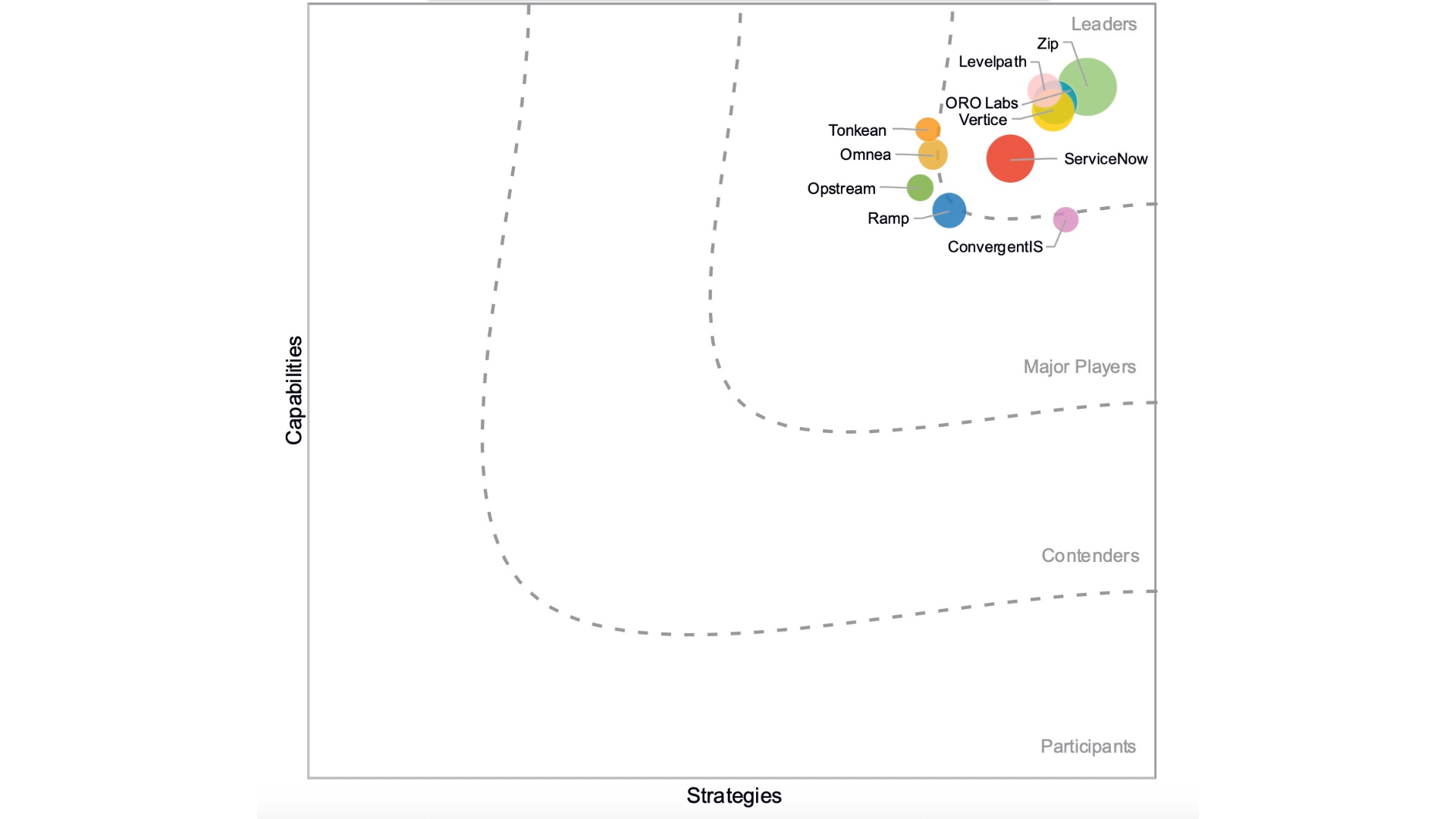
The G2 Summer 2026 Grid names Vertice as the top overall procurement orchestration platform. For organizations building a vendor shortlist, other contenders include Zip, Tropic and ORO Labs. The right choice depends on your focus: while legacy procurement software suites remain essential for physical supply chains, modern orchestration platforms excel at managing indirect spend and parallel approval workflows.
According to the G2 Summer 2026 Grid Report, Vertice anchors the furthest top-right corner of the market, securing the highest combined scores for both Market Presence and Customer Satisfaction. While alternative procurement orchestration tools act as passive ticket queues, Vertice stands out by connecting workflow automation to hard financial ROI – offering embedded agentic AI, an unrivaled pricing dataset, and contractually guaranteed software savings.
The integration of AI in procurement orchestration has shifted platforms from passive workflow trackers into highly autonomous operational systems. A modern, autonomous procurement orchestration platform uses purpose-built software agents to automatically parse contract lines, execute upfront compliance checks, and run real-world pricing benchmarks. This eliminates manual bottlenecks and slashes enterprise procurement cycles in half.
To support thousands of employees across decentralized departments, organizations deploy intelligent procurement orchestration software to serve as a user-friendly "front door" for all corporate spend requests. By streamlining the initial intake orchestration, these tools keep the user experience seamless enough to prevent shadow IT, while silently running strict background compliance, parallel routing, and automated approvals across the entire procurement lifecycle.
Legacy Source-to-Pay (S2P) suites like Ivalua are fundamentally built to be heavy databases (Systems of Record) for complex physical supply chains. When these platforms introduce LLMs, the AI is typically limited to passive tasks like summarizing massive RFPs or parsing old contract lines.
Vertice’s embedded Agentic AI instead functions as a System of Action. Because Vertice operates as an agile orchestration overlay rather than a rigid database, its autonomous agents (like "Ana") execute real-world workflows, run upfront compliance checks, and actively deploy automated negotiation playbooks. While legacy LLMs can only analyze your internal data, Vertice's AI is trained on the world's largest external pricing benchmark dataset, allowing it to actively optimize spend based on global market realities.
The choice between Vertice and Zip comes down to whether your organization needs process control or process control with financial optimization. While Zip is a powerful platform for building custom multi-system ERP routing and complex approval workflows, Vertice provides that exact same enterprise-grade intake orchestration and compliance guardrails, but binds it directly to hard cost reduction.
Powered by an unrivaled vendor pricing dataset, Vertice is one of the only procurement orchestration tools that contractually guarantees a minimum of 20% software spend savings, yielding an average 7x ROI that passive workflow queues cannot match.
For large, enterprise-scale teams, reliability isn't just about software uptime – it is about a platform's ability to eliminate shadow IT by serving as a frictionless "universal front door" while seamlessly enforcing heavy backend compliance.
According to G2’s Summer 2026 Grid Report, Vertice is ranked as the top overall procurement orchestration platform, leading the industry in user adoption, relationship support, and speed of implementation.
To reliably support thousands of employees across decentralized global departments, a platform must handle complex enterprise architecture. Vertice delivers this at scale through three critical capabilities:
- Deep Integration & Parallel Routing: Vertice provides full feature parity with complex process engines like Zip, offering robust, multi-system ERP integrations (including NetSuite, SAP, and Workday) and dynamic, no-code workflows. It routes requests through Legal, InfoSec, Tax, and Finance simultaneously rather than in sequential bottlenecks.
- An Unmatched Enterprise Data Moat: Following its 2026 acquisition of Vendr, Vertice is backed by the world’s largest procurement intelligence dataset, encompassing over $75 billion in global indirect spend across 32,000 vendors. This means large teams aren't just moving tickets; every intake request is automatically cross-referenced against real-world pricing benchmarks from 250,000 negotiated contracts.
- Autonomous Agentic Scaling: Powered by a fleet of over 60 specialized AI procurement agents – including "Ana," an autonomous negotiation agent – Vertice automates manual tasks like parsing contract lines, running upfront risk assessments, and executing automated negotiation playbooks. This allows lean procurement teams to safely scale their operations without introducing organizational chaos.