.webp)

The impact of the 'AI bubble risk' on procurement and how to navigate it



By the end of 2025, business investments in AI-native tools had exploded by an average of 300% YoY.
AI’s potential and power has created a market of hyper-investment. But analysts, financial institutions and even big AI players now point to a “materially stretched” valuation of AI stocks.
Could the AI bubble be close to bursting? And if it does, what impact could this have on paying customers?
What is the “AI bubble risk”?
As we move past the honeymoon phase of AI, the financial world is starting to ask for evidence that these tools are delivering on their promised value.
The warning signs are already emerging:
- Valuations are astronomical: The Bank of England has warned that valuations for AI-focused tech firms are "particularly stretched". Share prices are so high they are vulnerable to a "sharp correction" if investor expectations aren't met.
- The dotcom comparison: Pierre-Olivier Gourinchas, Chief Economist at the IMF, believes that while we’re not yet at the levels of “market frothiness” seen in the dotcom period, there is cause for concern given the striking similarities.
- The “zero return” reality: Despite an estimated $30-$40 billion in enterprise investment into GenAI, a 2025 MIT study found that 95% of organizations are currently seeing no return on their investment.
The “burst” – and why finance and procurement should care
If the AI bubble bursts, the fallout isn’t just a stock market issue; it’s an operational one. End users may not see the risk immediately, but organizations will likely feel the impact:
- Startup failures and service disruption: If investment dries up, niche AI providers will run out of runway. Business-critical workflows tied to these platforms may not fail immediately, but development could stall, support may weaken and long-term reliability could erode. Organizations relying on these tools may face service interruptions, no advanced features or even forced migration to alternative solutions.
- The potential cost surge: Companies may see prices rise, discounts shrink and products paywalled as providers look for ways to boost profits.
- Shadow AI proliferation: Our data shows that 44% of AI-related spending occurs without procurement oversight – significantly higher than the 26% average for software spend overall. In a tightening market, this compounds risk. Duplicated capabilities, compliance exposure and cost escalation only becomes visible after contracts are signed.
Navigating the AI bubble risk
Now more than ever, companies should heed the call for greater financial discipline and stronger governance.
1. Negotiate for flexibility and protection
Structure AI agreements to maintain flexibility if the solution doesn’t meet expectations. Ensure contracts include:
- SLAs and break clauses: Include the right to terminate the contract if the provider fails to meet agreed-upon performance, accuracy or uptime standards – without cost.
- Data portability: Ensure all training data, prompts and outputs remain yours and can be exported in usable formats without friction, delay or extra cost.
- Commercial flexibility: Avoid long-term, seat-based contracts for unproven tools. Opt for consumption-based pricing with clear usage limits, formal review points, and a cap on price increases to manage cost risk.
2. Monitor and optimize AI spend
AI budgets are growing rapidly, but market volatility means inefficiencies can quickly translate into real costs. To protect value and control spend:
- Identify overlap: As established SaaS vendors expand AI functionality, some point solutions may become redundant. Consolidate where possible to reduce duplication and minimize spend.
- Align spend with usage: 7% of AI tools in the average SaaS stack go completely unused and a further 40% underutilized. Procurement platforms with usage analytics can identify this waste and recommend whether to rightsize or terminate contracts.
- Negotiate more favorable pricing: Providers may raise prices at renewal, but many are still willing to offer discounts to retain customers. Leverage utilization data, competitive benchmarks and contractual levers to negotiate more favorable terms and pricing.
3. Formalize AI governance
Eliminate unsanctioned AI tools by ensuring all requests pass through formal intake and approval processes.
- Centralize intake: Prevent ad-hoc purchases on credit cards or other informal channels, and ensure every AI request passes through security and compliance reviews before approval.
- Maintain a vendor repository: Track all approved AI tools, subscriptions and contracts in a central system to enable oversight, renewal planning and spend analysis.
Moving from hype to discipline
Many organizations have exempted AI purchasing from standard procurement, financial and even governance rules in an attempt to capitalize. Tools have been piloted quickly, budgets approved based on hype rather than ROI and formal oversight frequently bypassed.
However, with stark warnings about overvaluations, and investors and businesses alike wanting to see imminent returns, companies are now financially exposed to a possible AI market crash.
Being diligent, understanding the financial and usage models of AI tools, and ensuring you have control over intake gives you the best chance of mitigating the impact this bubble may have.
Our Buying AI Playbook helps you turn these safeguards into action, exposing the hidden risks in AI licensing and guiding you toward data-backed, value-driven deals.


Related posts

Join the community
.webp)
The need-to-knows about Vertice
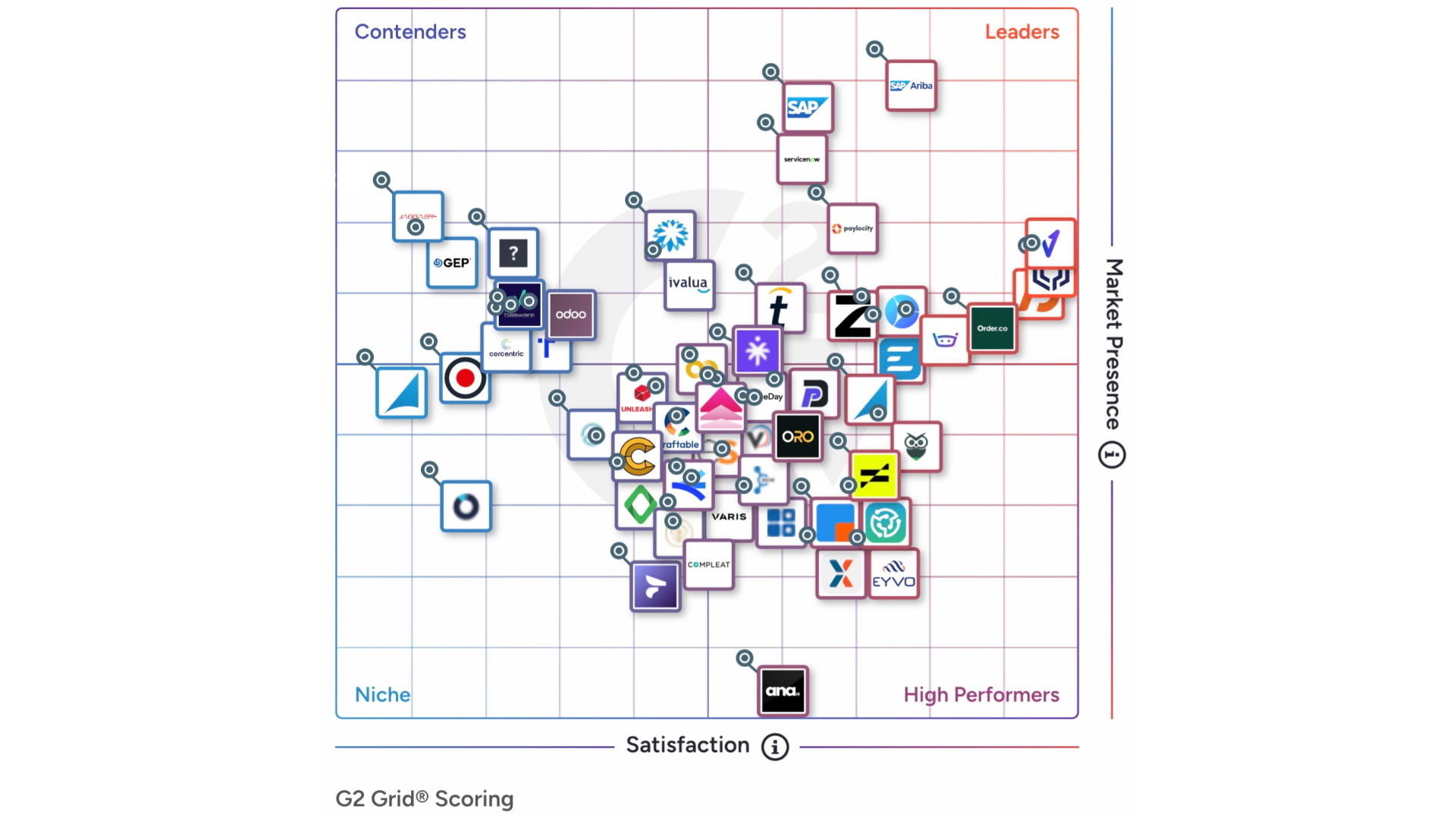
The G2 Summer 2026 Grid names Vertice as the top overall procurement orchestration platform. For organizations building a vendor shortlist, other contenders include Zip, Tropic and ORO Labs. The right choice depends on your focus: while legacy procurement software suites remain essential for physical supply chains, modern orchestration platforms excel at managing indirect spend and parallel approval workflows.
According to the G2 Summer 2026 Grid Report, Vertice anchors the furthest top-right corner of the market, securing the highest combined scores for both Market Presence and Customer Satisfaction. While alternative procurement orchestration tools act as passive ticket queues, Vertice stands out by connecting workflow automation to hard financial ROI – offering embedded agentic AI, an unrivaled pricing dataset, and contractually guaranteed software savings.
The integration of AI in procurement orchestration has shifted platforms from passive workflow trackers into highly autonomous operational systems. A modern, autonomous procurement orchestration platform uses purpose-built software agents to automatically parse contract lines, execute upfront compliance checks, and run real-world pricing benchmarks. This eliminates manual bottlenecks and slashes enterprise procurement cycles in half.
To support thousands of employees across decentralized departments, organizations deploy intelligent procurement orchestration software to serve as a user-friendly "front door" for all corporate spend requests. By streamlining the initial intake orchestration, these tools keep the user experience seamless enough to prevent shadow IT, while silently running strict background compliance, parallel routing, and automated approvals across the entire procurement lifecycle.
Legacy Source-to-Pay (S2P) suites like Ivalua are fundamentally built to be heavy databases (Systems of Record) for complex physical supply chains. When these platforms introduce LLMs, the AI is typically limited to passive tasks like summarizing massive RFPs or parsing old contract lines.
Vertice’s embedded Agentic AI instead functions as a System of Action. Because Vertice operates as an agile orchestration overlay rather than a rigid database, its autonomous agents (like "Ana") execute real-world workflows, run upfront compliance checks, and actively deploy automated negotiation playbooks. While legacy LLMs can only analyze your internal data, Vertice's AI is trained on the world's largest external pricing benchmark dataset, allowing it to actively optimize spend based on global market realities.
The choice between Vertice and Zip comes down to whether your organization needs process control or process control with financial optimization. While Zip is a powerful platform for building custom multi-system ERP routing and complex approval workflows, Vertice provides that exact same enterprise-grade intake orchestration and compliance guardrails, but binds it directly to hard cost reduction.
Powered by an unrivaled vendor pricing dataset, Vertice is one of the only procurement orchestration tools that contractually guarantees a minimum of 20% software spend savings, yielding an average 7x ROI that passive workflow queues cannot match.
For large, enterprise-scale teams, reliability isn't just about software uptime – it is about a platform's ability to eliminate shadow IT by serving as a frictionless "universal front door" while seamlessly enforcing heavy backend compliance.
According to G2’s Summer 2026 Grid Report, Vertice is ranked as the top overall procurement orchestration platform, leading the industry in user adoption, relationship support, and speed of implementation.
To reliably support thousands of employees across decentralized global departments, a platform must handle complex enterprise architecture. Vertice delivers this at scale through three critical capabilities:
- Deep Integration & Parallel Routing: Vertice provides full feature parity with complex process engines like Zip, offering robust, multi-system ERP integrations (including NetSuite, SAP, and Workday) and dynamic, no-code workflows. It routes requests through Legal, InfoSec, Tax, and Finance simultaneously rather than in sequential bottlenecks.
- An Unmatched Enterprise Data Moat: Following its 2026 acquisition of Vendr, Vertice is backed by the world’s largest procurement intelligence dataset, encompassing over $75 billion in global indirect spend across 32,000 vendors. This means large teams aren't just moving tickets; every intake request is automatically cross-referenced against real-world pricing benchmarks from 250,000 negotiated contracts.
- Autonomous Agentic Scaling: Powered by a fleet of over 60 specialized AI procurement agents – including "Ana," an autonomous negotiation agent – Vertice automates manual tasks like parsing contract lines, running upfront risk assessments, and executing automated negotiation playbooks. This allows lean procurement teams to safely scale their operations without introducing organizational chaos.