
SaaS benchmark prices deviation
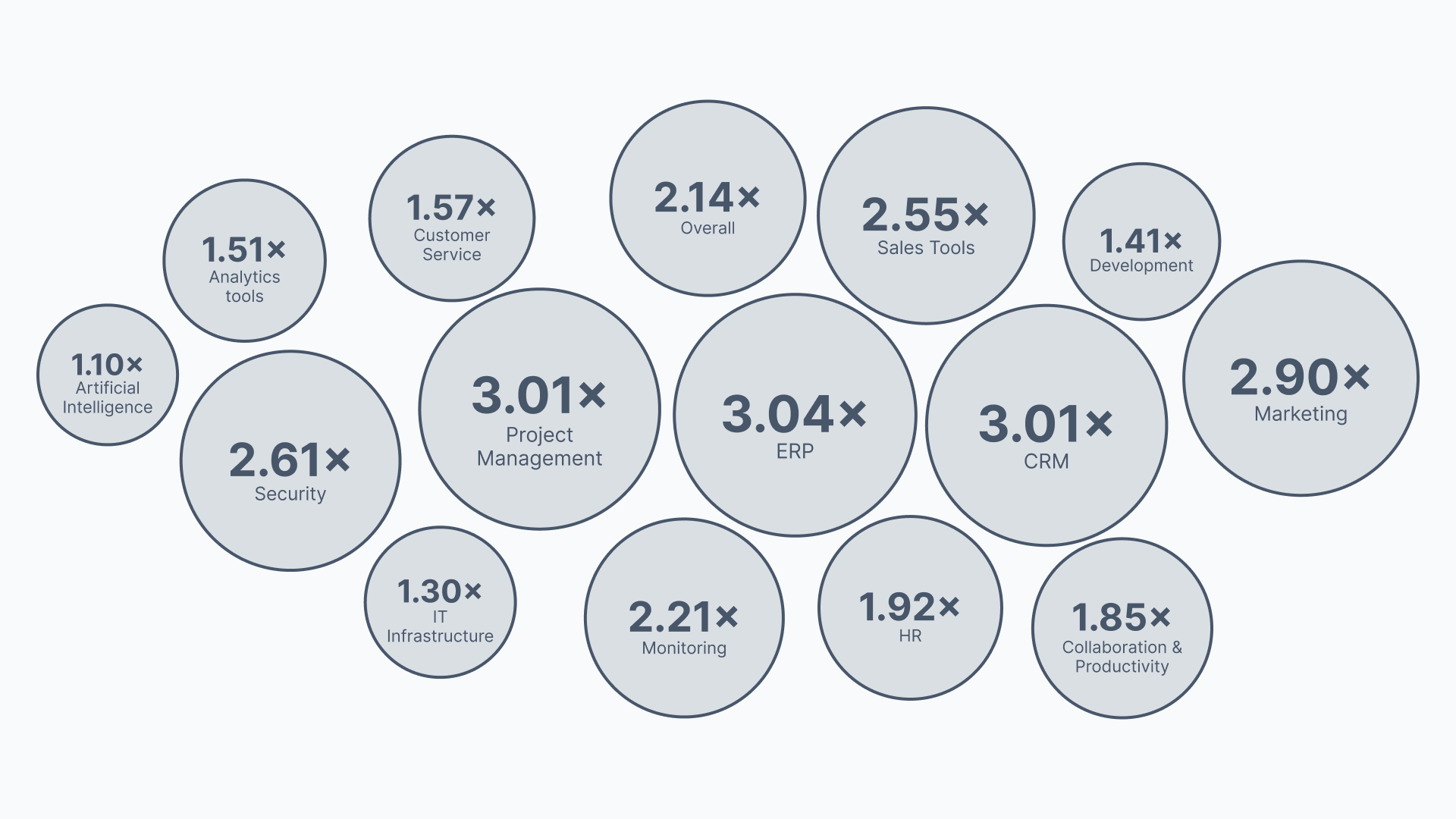

Which SaaS categories have the highest pricing inconsistency in 2026?
The overall pricing gap between the best and worst negotiated deals has barely moved – 2.15x in Q1 2026 versus 2.14x in Q2 2026 – but that stability masks significant movement underneath. Several categories saw sharp swings in either direction, with Artificial Intelligence showing the most dramatic shift of any category tracked.
The three pricing-maturity tiers have reshuffled significantly
Tier 1: Mature and stable (most consistent pricing)
Categories: Artificial Intelligence (1.10), IT Infrastructure (1.30), Development (1.41), Analytics Tools (1.51), Customer Service (1.57).
Artificial Intelligence is the standout addition to this tier, moving from one of the most dispersed categories to the least dispersed in a single quarter, suggesting that AI vendor pricing is standardizing far faster than the rest of the market.
Tier 2: Evolving and standardized (moderate variance)
Categories: Collaboration & Productivity (1.85), HR (1.92), Monitoring (2.21).
HR saw the sharpest percentage increase of any category, with its ratio rising 39.1%, indicating that HR software pricing has become considerably more negotiable and inconsistent than it was last quarter. Collaboration & Productivity moved the opposite way, dropping out of the highest-disparity tier as its pricing became notably more standardized.
Tier 3: High-complexity and emerging (highest disparity)
Categories: Sales Tools (2.55), Security (2.61), Marketing (2.90), CRM (3.01), Project Management (3.01), ERP (3.04).
ERP, CRM and Project Management are now effectively tied at the top of the market for pricing inconsistency, each above a 3x gap between well-negotiated and poorly-negotiated deals. Project Management saw the largest increase within this tier, up 21.9%, moving it from a moderate-disparity category into the most opaque tier.
A poorly negotiated deal in these top-tier categories can cost up to three times what a well-negotiated one does for comparable software – a gap that real-time pricing benchmarks close by showing exactly where a company's current or quoted pricing sits relative to the market, rather than relying on vendor-supplied quotes alone.
Data source: These insights are derived from over $75bn of global processed spend managed by Vertice in 2026.
Are you overpaying for SaaS?
Are you overpaying for SaaS?
Related materials

Related insights
Join the community
.webp)
The need-to-knows about Vertice
Pricing deviation exists because vendors have a bird's-eye view of the market, while individual companies often only see their own contracts. Vertice levels the playing field by acting as a strategic data and negotiation partner.
- Real-time, independent benchmarking data: Vertice leverages transactional data from 16,000 global suppliers, allowing procurement teams to see exactly where their current pricing sits on the 2.15x deviation scale.
- Expert negotiation: Vertice’s specialists leverage these benchmarks to help organizations move from high-end market rates toward the 20th percentile, typically securing 20%+ guaranteed savings across an organization’s entire software stack.