
Download the How to Avoid Vendor Lock-In Report
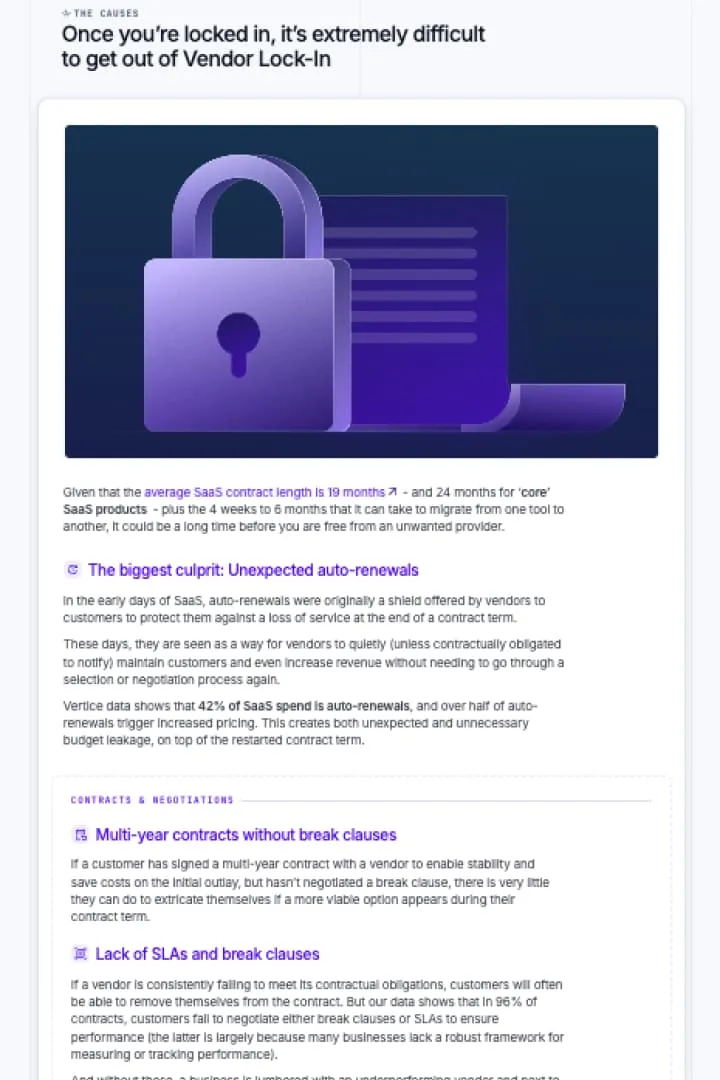
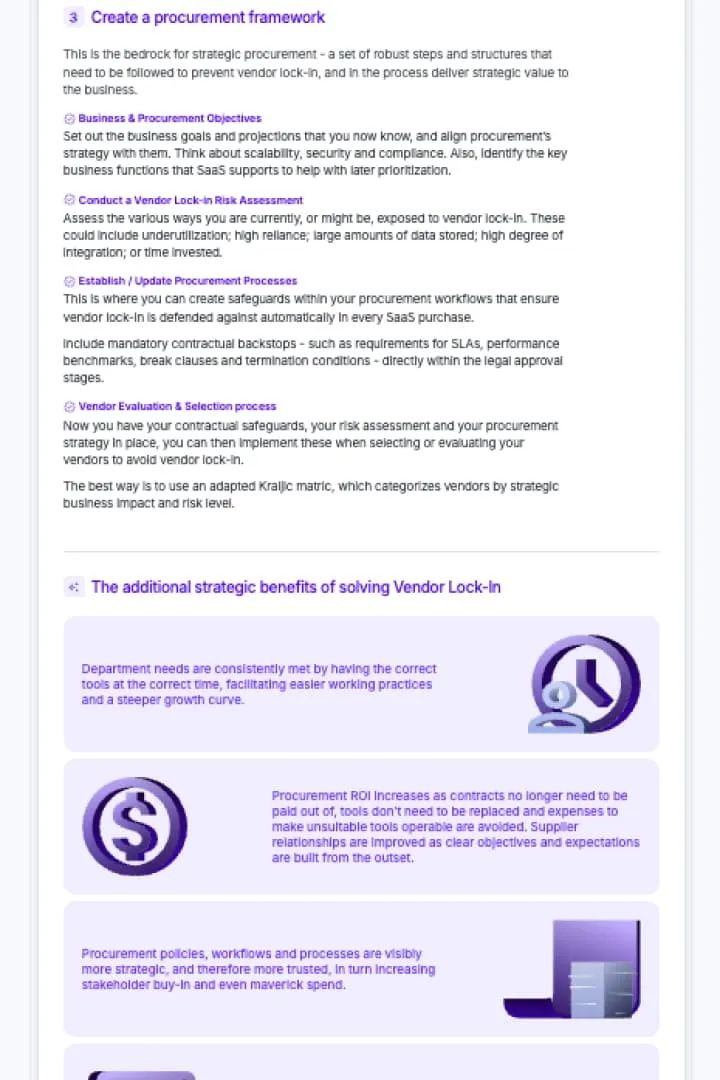
Supplier lock-in is costing companies flexibility, leverage, and often a substantial amount of money. Our latest report uncovers practical strategies for preventing it and future-proofing your organization.
What you will learn:
- What’s causing vendor lock-in – and the warning signs to look out for
- Actionable steps for preventing supplier lock-in
- Short-term fixes you can implement to protect your business ahead of renewals

Proven strategies for avoiding vendor lock-in
87% of procurement leaders have experienced vendor lock-in – and it’s a problem threatening agility and cost-efficiency:
- The race for AI adoption is accelerating procurement decisions, often without assessing long-term supplier risk.
- New pricing models may look attractive, but often include hidden fees, restrictive terms, and limited exit options.
- Supplier lock-in can lead to inflated costs at renewal, as vendors aren’t faced with competitive pressure.
Supplier lock-in feeds on procurement departments that lack time, pricing intel, and SaaS visibility – all of which are crucial for mitigating these risks and avoiding vendor lock-in.

Supplier lock-in is driven by design – but it’s largely preventable
Knowing the warning signs of vendor lock-in is critical for avoiding long-term operational and financial consequences.
- Contracts that auto-renew without review or renegotiation.
- Contracts lacking break clauses, SLAs, and clear T&Cs.
- Limited procurement transparency, along with a lack of data ownership, portability, and access rights.
Recognizing these risk factors early puts you in control. By building flexibility into each and every software contract, and obtaining full oversight of your procurement processes, you can avoid supplier lock-in and maintain leverage in your negotiations.
.png)
.png)

.png)